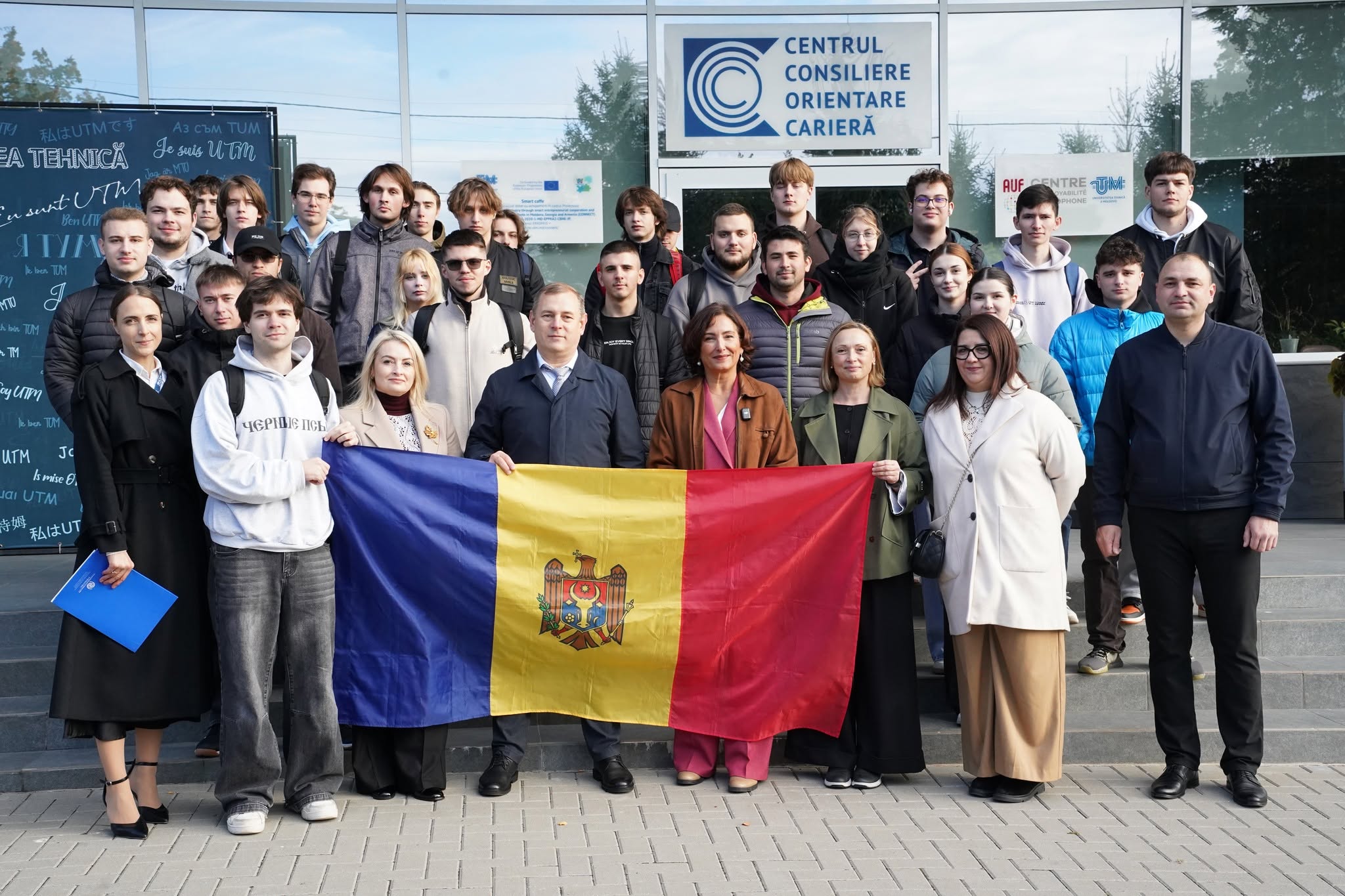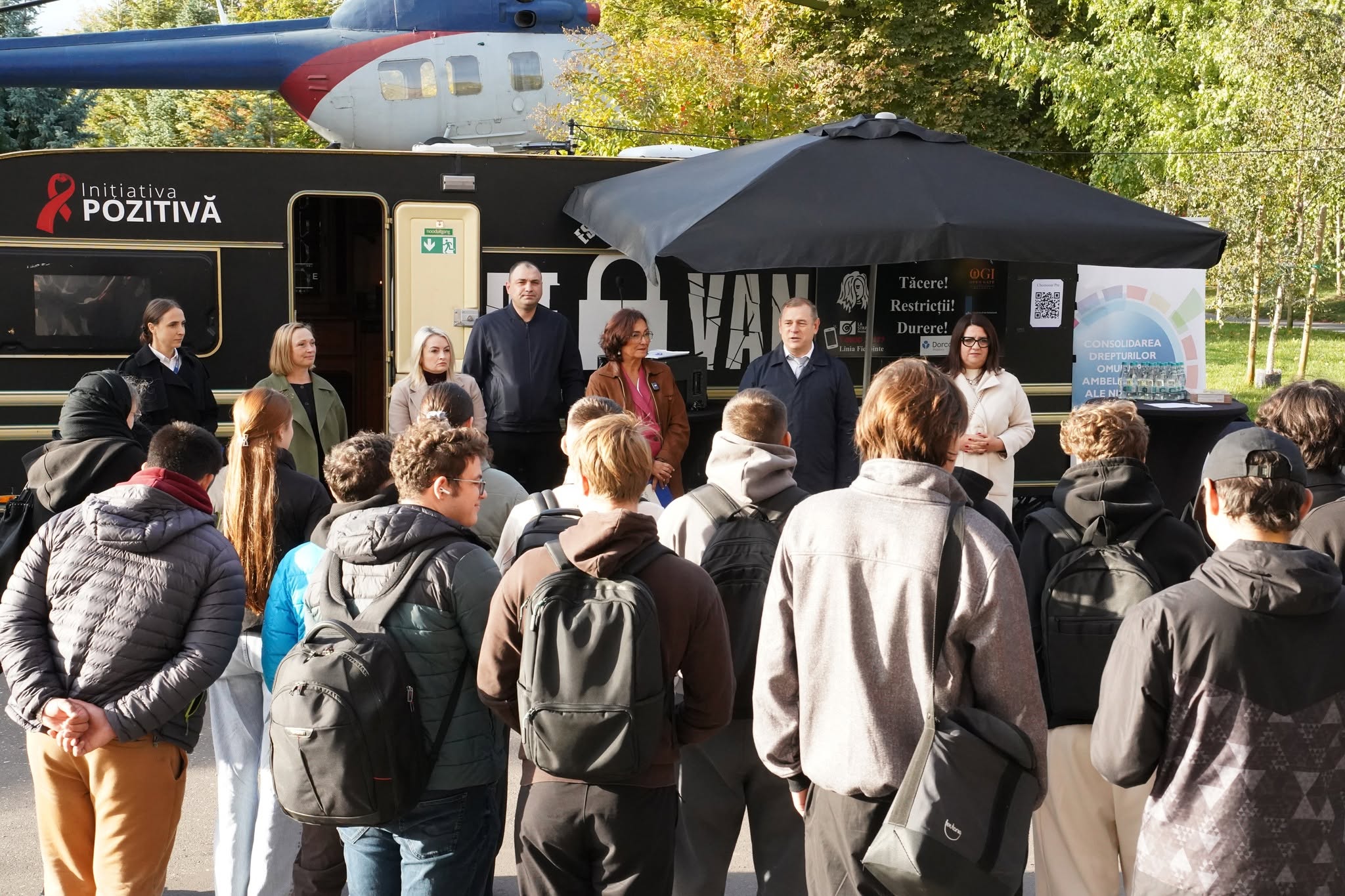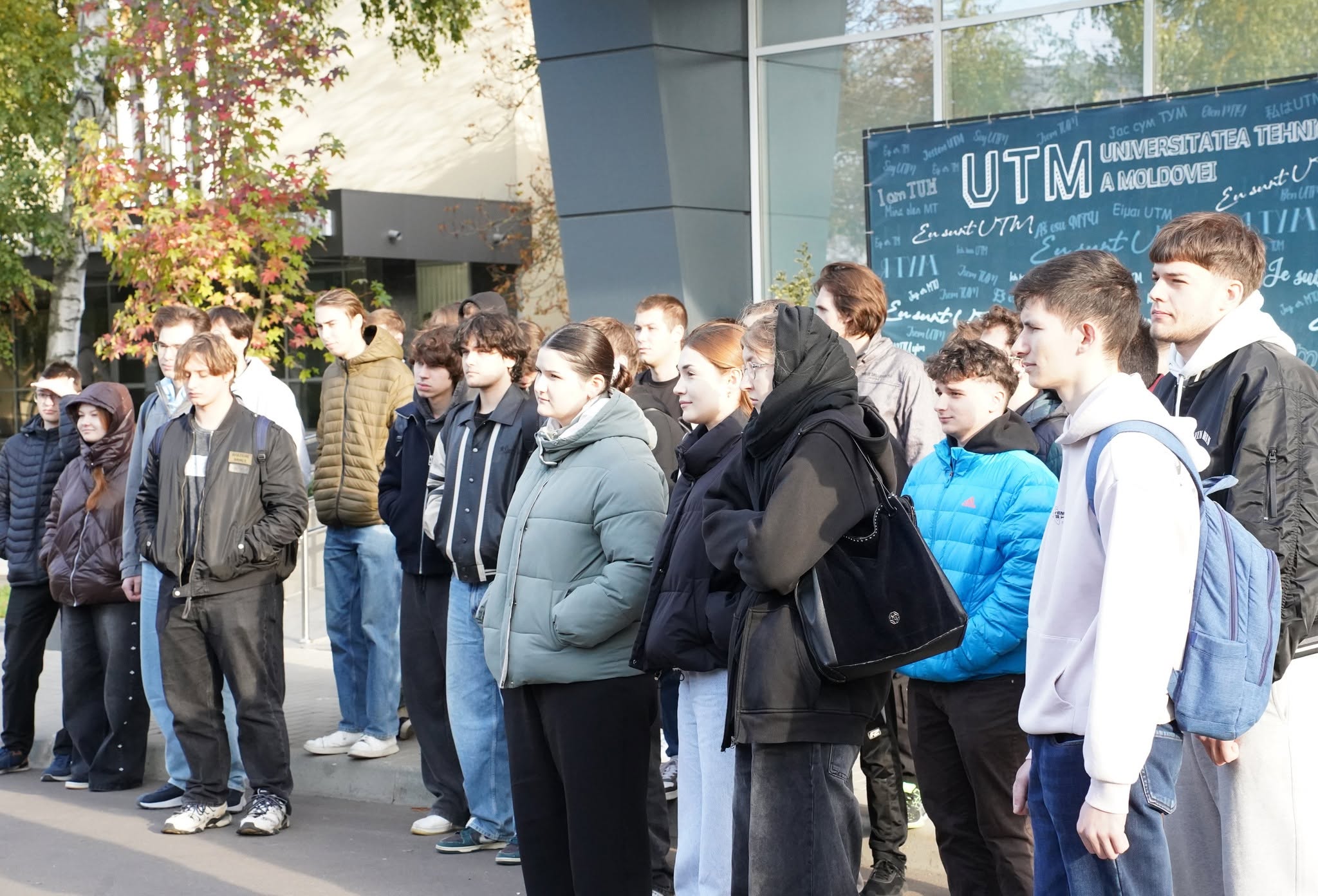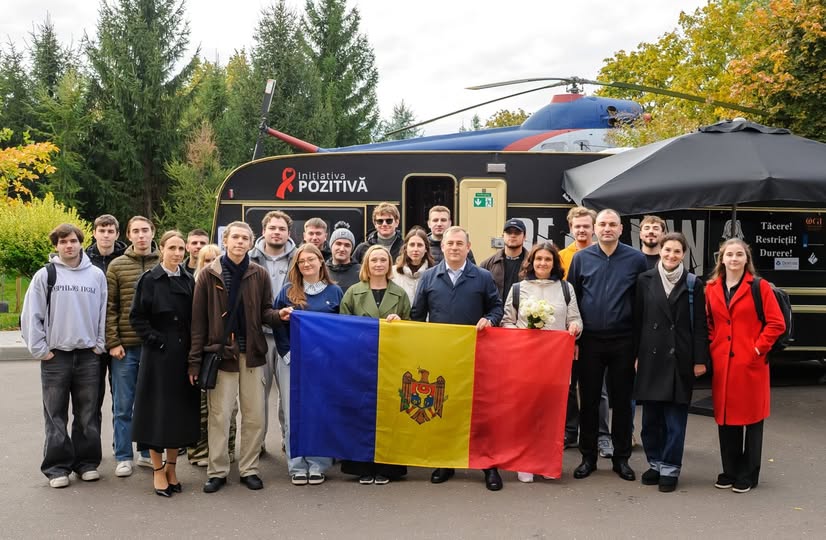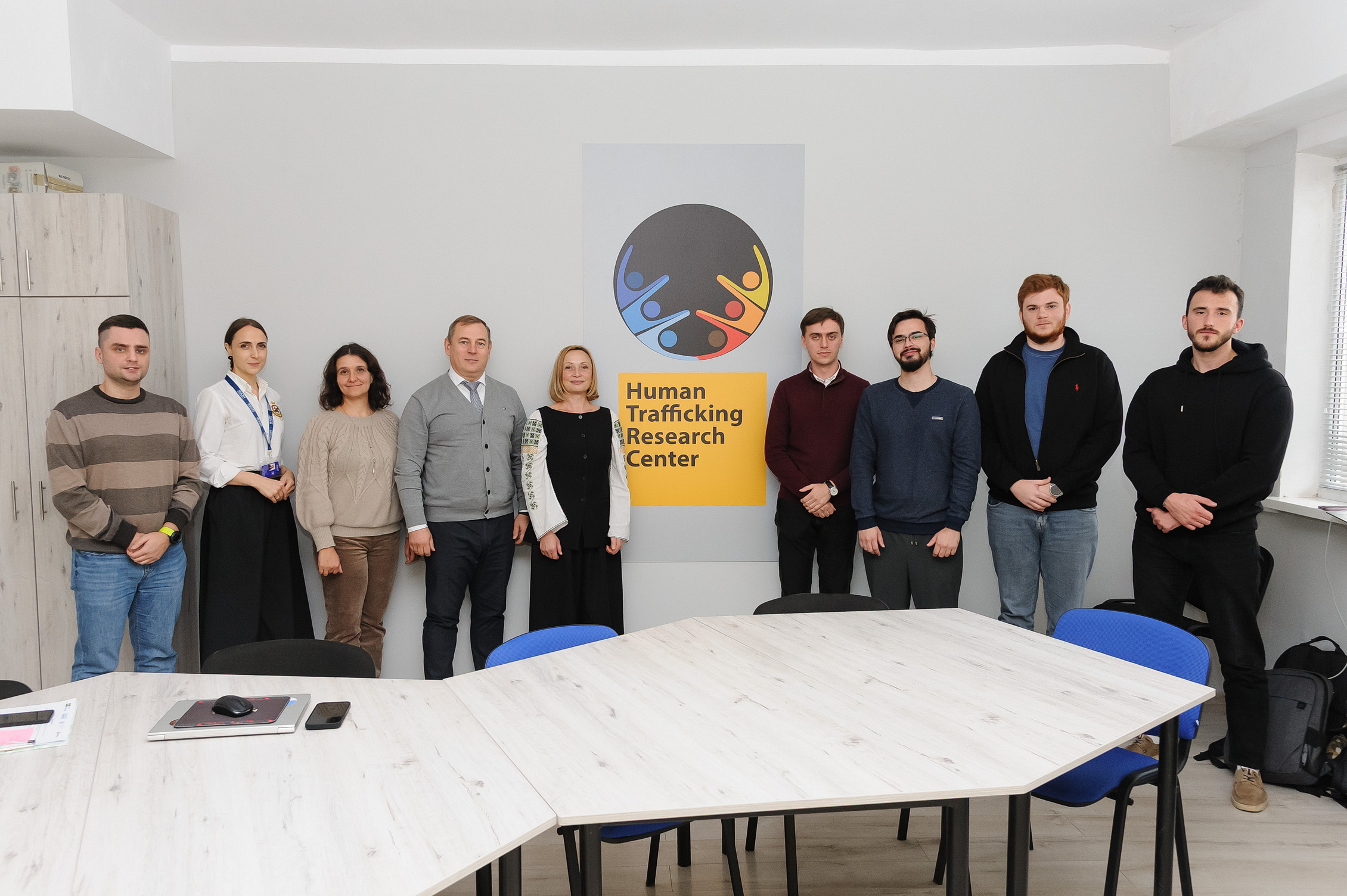
In the context of activities dedicated to the European Anti-Trafficking Day, on October 16, 2026, the Technical University of Moldova (TUM) hosted a series of awareness-raising, educational, and research initiatives organized as part of the “EscapeVan – Education and Awareness for the Prevention of Human Trafficking” project. The event brought together representatives from the International Organization for Migration (IOM) in the Republic of Moldova and the Public Association “Positive Initiative,” alongside TUM faculty, researchers, and students, providing a platform for dialogue and collaboration on preventing and combating human trafficking.
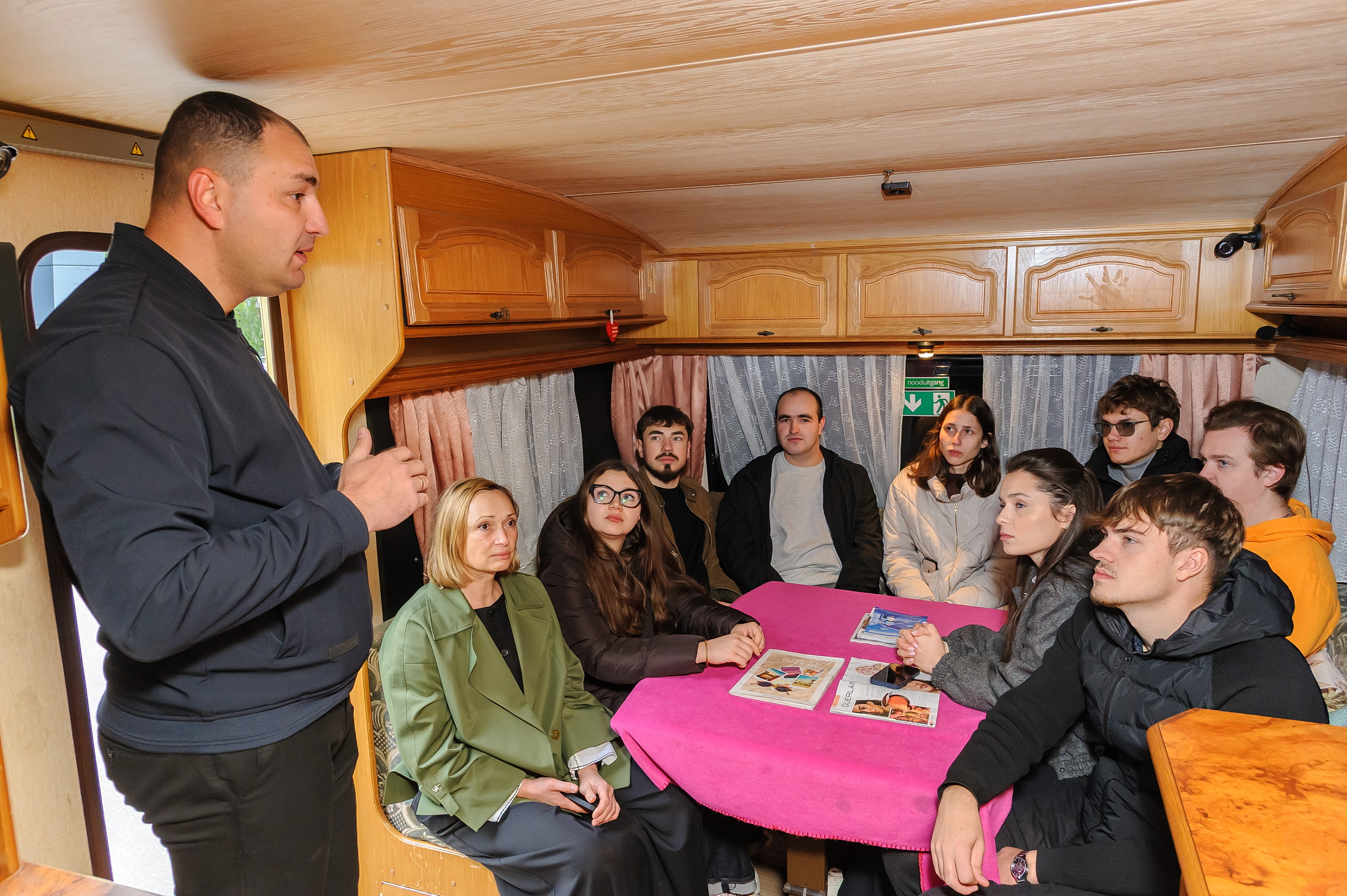
The event opened with addresses to the participants by Grigore Moga, representative of the Public Association “Positive Initiative” and project manager; Ana Țurcan, Vice-Dean of the Faculty of Computers, Informatics, and Microelectronics (FCIM); Ester Ruiz de Azua, Head of the IOM Mission in the Republic of Moldova; and Mariana Catruc, coordinator of the SPATIUM Research Center at TUM. Their remarks highlighted the role of education, research, and institutional cooperation in developing effective mechanisms to prevent human trafficking, as well as the importance of actively involving young people in fostering an informed and responsible society. The program continued with a presentation of the “EscapeVan” concept by trainer Valeriu Chioibaș, who demonstrated how interactive learning methods can help raise awareness about the risks associated with human trafficking. Throughout the day, eight groups of students from the Technical University of Moldova (UTM) participated in the EscapeVan sessions, where they had the opportunity to explore real-life scenarios, identify potential risks, and develop their analytical skills and capacity for responsible action in vulnerable situations.
A key highlight of the event was a round-table discussion on the prevention and combatting of human trafficking, which brought together representatives from partner organizations, researchers, academic staff, and developers of innovative projects. Participants included Grigore Moga, representing the NGO “Positive Initiative” (Inițiativa Pozitivă); Mariana Catruc, coordinator of the SPATIUM Research Center; Sorina Guzun, Senior Project Associate (Protection) at IOM Moldova; as well as Alexandr Cara, Alexandru Grama, and Mihai Corețchi—developers of the “Trafficking Escape” and “OSIRIS” projects—alongside faculty members from the Faculty of Computers, Informatics and Microelectronics (FCIM).
Joining online, Jorn van Rij, the creator of the EscapeVan project, shared the European Union’s experience in preventing and combatting human trafficking, providing an international perspective on the practices and approaches applied in this field.
Special attention was also given to the presentation of student research findings and the application of digital technologies in the development of tools for awareness-raising and prevention. The projects presented sparked discussions on how to leverage technological expertise and interdisciplinary research to identify solutions with a social impact.
The involvement of the SPATIUM Research Center and the FCIM academic community highlighted the importance of collaboration between education, research, and civil society, demonstrating that the outcomes of scientific work can help address current social challenges. Furthermore, the event provided students with the opportunity to understand that information technologies and the skills acquired during their university studies can be applied not only within the technical field but also in developing solutions for the safety and well-being of society.
The FCIM leadership extends its sincere gratitude to the International Organization for Migration in the Republic of Moldova, the NGO “Positive Initiative,” the SPATIUM Research Center, as well as the experts, faculty members, and students involved, for their contributions to the organization and execution of these activities.
The event reaffirmed the university’s role in promoting education, research, and innovation as essential tools for preventing social risks, fostering civic responsibility, and training generations of specialists capable of actively contributing to addressing the challenges of contemporary society.