Archive for category: In the spotlight

In the spotlight

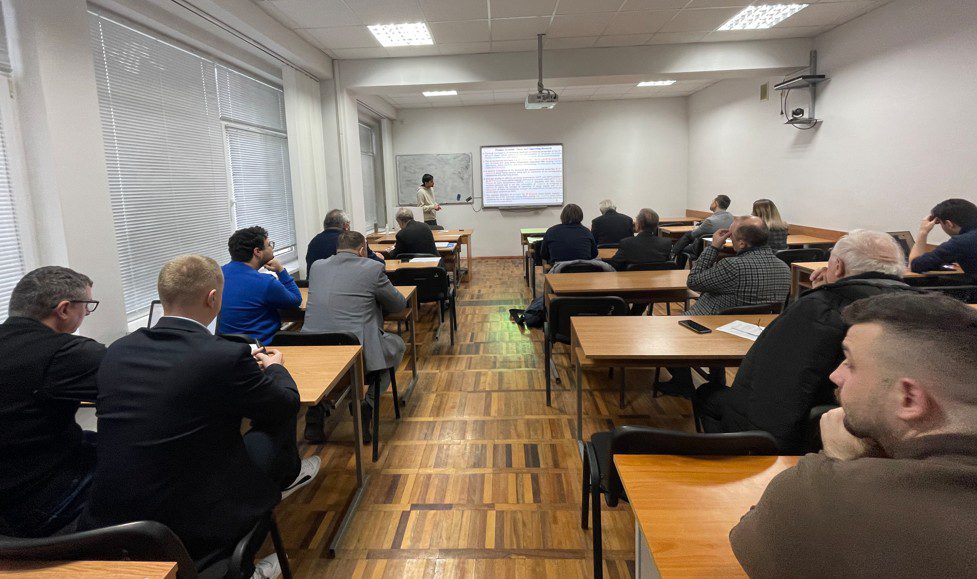
FCIM Students at the National Bureau of Statistics’ Open Day

On October 17, 2025, on the occasion of Statistician’s Day—celebrated once every five years on October 20—students from FCIM, majoring in Data Science and Applied Informatics, together with peers from other universities in the Republic of Moldova, participated in the Open Day organized by the National Bureau of Statistics (NBS).

The event offered young participants the opportunity to gain inside perspectives on the institution’s work and the essential role of official statistics in the country’s socio-economic development. The agenda included a guided tour of the NBS headquarters, a presentation of the official website with a focus on efficient information search methods, and a demonstration of the functionalities of the Statistical Data Bank.

Students were also informed about employment opportunities and internship placements available at the NBS. They took part in an interactive Q&A session and a quiz competition, with prizes awarded to the winners.

Throughout the visit, participants engaged with the management team and institutional specialists, who outlined the NBS mission and values, the principles guiding the production of official statistics, and the alignment of these processes with European and international standards. They also emphasized the role of official statistical data in evidence-based public policymaking and in ensuring the sustainable development of society.

The students were introduced to the Paid Internship Program in the public service, designed for young people from the Republic of Moldova and abroad, which aims to deepen theoretical knowledge, develop professional competencies, and foster a responsible attitude toward work in the field of statistics.

Visitors showed particular interest in the modern methods of data collection, processing, and analysis employed by NBS specialists to ensure the quality and relevance of statistical information. Participants received informative materials on the role of statistical data in society and on the professional development opportunities offered by the institution.

The event formed part of the series of statistical education activities carried out by the NBS during 2024–2025, aimed at promoting the importance of official statistics and stimulating young people’s interest in careers in statistics and data science.

An Inspiring Meeting for FCIM Graduates

The final-year students of the Department of Software Engineering and Automation recently participated in a special activity alongside Mr. Eugen Galamaga, Regional Director of Allied Testing, a trusted partner of the Faculty of Computers, Informatics and Microelectronics (FCIM). Mr. Galamaga also serves as the long-standing president of the FCIM Bachelor Thesis Defense Committee, contributing consistently to the education and professional development of generations of young engineers.

During the meeting, Mr. Galamaga delivered an interactive lecture, offering students valuable insights into the process of completing their studies. He addressed essential aspects such as the expectations he has from young graduates during their thesis defenses, the qualities and competencies that should be demonstrated in final projects, the practical relevance of bachelor theses, and the way these works can become a significant advantage in the employment process. He also emphasized the connection between academic training and the industry, highlighting the importance of applied work and perseverance in building a successful career.

The meeting proved to be extremely beneficial for students, providing them with clear guidance on how to transform their bachelor thesis into a decisive step toward professional affirmation.

The Faculty of Computers, Informatics and Microelectronics sincerely thanks Mr. Eugen Galamaga for his constant support and for his significant contribution to the development and recognition of young engineers.

The Top 8 FCIM Students Awarded for Their Academic Achievements

At the Faculty of Computers, Informatics, and Microelectronics (FCIM), academic performance is a constant value. Many students achieve remarkable results through hard work, passion, and perseverance, contributing to the faculty’s reputation and demonstrating the high quality of the educational process.

Within this framework of excellence, the accomplishments of the top eight students of the faculty were highlighted, as they were included in the Top 1% on the Rector’s List. These students represent models of commitment, professionalism, and dedication, proving through their success that FCIM prepares specialists capable of meeting the highest standards.

This recognition was made possible thanks to the partnership established through the involvement of the UTM Rector, Dr. habil., Prof. Viorel Bostan, and the company Appsfactory, which aimed to convey a message of trust and support for the talented youth of the Republic of Moldova. Through this initiative, the company reaffirms its mission to invest in the development of local human resources and to create bridges between the academic environment and the global technology community.

Dr. Roman Belter, representative of the company, congratulated the students, noting that “supporting local talent is more than a slogan – it is a mission. Your success shows that through effort and passion, outstanding careers can be built, inspiring others and opening new horizons.”

In turn, the Dean of FCIM, Dr. Dumitru Ciorbă, emphasized that the awarded students are “the visible face of the faculty and the ambassadors of our excellence, through the work, perseverance, and passion with which they distinguish themselves both in academic activity and in research and innovation. They are the engineers of tomorrow, those who will carry forward the reputation of FCIM.”

This event stands as proof of the fruitful collaboration between academia and industry partners, showing that recognizing students’ achievements and providing them with support contributes to strengthening a strong academic community oriented towards the future.

We are proud of our students and confident that these young people will continue to uphold the reputation of the Faculty of Computers, Informatics, and Microelectronics, building through their efforts a society founded on knowledge, innovation, and technological progress.

Building a Strong Digital Generation – The First Autumn School in Cybersecurity

Between September 15–20, 2025, the Technical University of Moldova and the National Institute for Innovations in Cybersecurity “Cybercor,” in partnership with the “Nicolae Bălcescu” Land Forces Academy of Sibiu, organized, for the first time, an Autumn School dedicated to cybersecurity. The event brought together over 50 participants – students, master’s candidates, and faculty members from Romania and the Republic of Moldova – in an intensive program of lectures, practical laboratories, and interactive sessions.

The event was held within the framework of the UNDERSEA subproject, coordinated by UTM’s Vice-Rector for Finance and International Relations, Daniela Pojar, and funded by the World Bank through the Government of the Republic of Moldova’s “Higher Education” project.

Among the participating institutions were: the “Nicolae Bălcescu” Land Forces Academy of Sibiu, “Lucian Blaga” University of Sibiu, Transilvania University of Brașov, Politehnica University of Timișoara, the “Gheorghe Lazăr” National College and “Octavian Ghibu” High School of Sibiu, together with the Technical University of Moldova.

548619673 1369236625247668 1171654560882808735 n 1

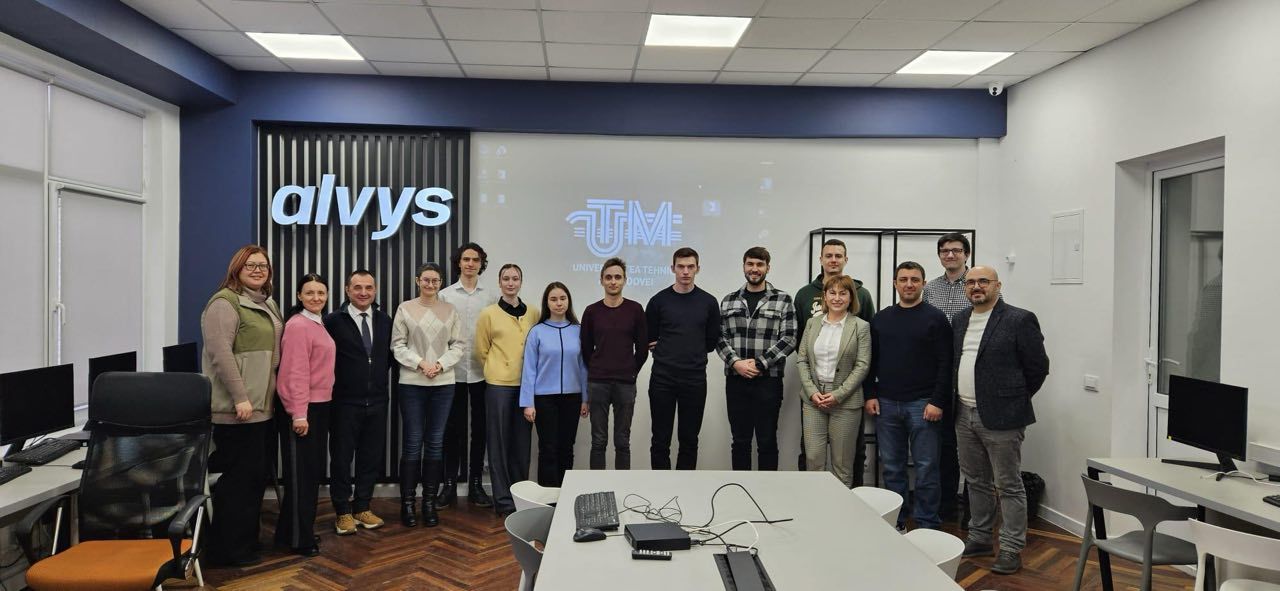
The Technical University of Moldova was represented by a delegation including Assoc. Prof. Dr. Dumitru Ciorbă, Dean of the Faculty of Computers, Informatics and Microelectronics; Assoc. Prof. Dr. Andrian Prisăcaru, Faculty of Electronics and Telecommunications; Dr. Ana Țurcan, Vice-Dean of FCIM; and Valentina Astafi, Coordinator of the “Information Security” study program at FCIM.

A central role in coordinating both the theoretical and practical activities was held by Marius Dumitrașcu, Head of the Department of Research, Training and Partnerships at CYBERCOR, who oversaw the full academic and applied dimension of the school. His involvement enabled participants to engage with real-life cybersecurity scenarios and to acquire essential applied skills in the field.

The program of the Autumn School began with sessions focusing on the configuration of working environments and the analysis of current trends in the field. It continued with exercises on topics such as web application security, critical infrastructures, attack and defense techniques, digital forensics, and embedded systems security. The thematic agenda also addressed current issues, including the use of artificial intelligence in cyber conflicts and ransomware behavior analysis through reverse engineering.

The event featured renowned experts from partner companies and institutions, including Robert Bordei and Adrian Stănilă (Visma), Alexandru Domnițeanu (DMI-Automotive), Emil Cebotaroș and Emanuel Strugaru (Cybercor/Codwer), as well as mentors Octavian Magdei and Alexandru Tocan (Cybercor/Codwer).

The final day was dedicated to a Capture the Flag (CTF) competition, where teams tackled complex challenges in the fields of Web, Forensics, Misc, and Reverse Engineering. On the same day, two keynote presentations were delivered: The Human Firewall, presented by Alexa-Ștefana Josephs (DNSC), and Balancing National Cybersecurity and Academic Freedom for Research, presented by Stelian Cristea, Deputy Director of DNSC.

The Autumn School in Cybersecurity concluded with the validation of results, the awarding of participation certificates, and the presentation of future internship and mentoring opportunities, thereby strengthening collaboration between academia and the professional cybersecurity community.

Innovation made in TUM impresses Europe: 1st and 2nd places at EIA 2025

Against the historical backdrop of the Eternal City – as Rome is nicknamed – the innovation of the Technical University of Moldova shone, transforming the Italian capital into the scene of international consecration. Six outstanding young people from UTM achieved exceptional performances at the European Innovation Academy (EIA) 2025, the most prestigious entrepreneurial education program in Europe, attended by students from all over the world. The event took place between July 27 and August 15 at St. John’s University.

The six students who proudly represented the Technical University of Moldova are: Alex ALCAZ and Bianca-Cornelia COJOCARU (Business Administration, FIEB), Ruxanda VOVC and Cătălina DAVID (Information Technology, FCIM), along with Elena ROMAȘENCO and Maxim IACOVLEV (Software Engineering, FCIM). With bold ideas and high ambitions, they integrated into international teams, applying the knowledge acquired at the ICEBERG Bootcamp.

The program included validating business ideas, field research, applying the Skinny Business Model Canvas method, and defining clear value propositions. These sustained efforts brought them a unique experience, 6 internationally recognized university credits, as well as top awards, thus demonstrating the quality of TUM’s academic training.

1a 1

One of the most notable successes was the First Place, won by the Pactera team, which includes Alex ALCAZ, awarded with EUR 15,000 for business development. Another exceptional performance was the Second Place, which went to the Alatara team, with Elena ROMAȘENCO, awarded with EUR 10,000.

2 4

The international distinctions did not stop there. The Cubelet team, with Ruxanda VOVC, received the Best Pitch Award, thus recognizing the superior quality of the presentation. Also, the Otto team, with Maxim IACOVLEV and Bianca-Cornelia COJOCARU, was honored with the Highest Mentor Feedback Award, an indicator of the excellent feedback received from the mentors, which emphasizes the professionalism and responsiveness of the students.

Moreover. Two student teams from TUM obtained international intellectual property scholarships: Calmia, with Cătălina DAVID, won the Patent Scholarship (10,000 EUR) to cover patenting costs, and Cubelet, with Ruxanda VOVC, received the Trademark Scholarship (5,000 EUR) to protect the brand. Both startups will benefit from free professional mentoring from the international firm Nixon Peabody LLP, with an estimated value of EUR 50,000 each, an essential support to accelerate their path to market. All financial awards will be reinvested in business development, thus confirming the pragmatic vision of the students.

Proud of the appreciation of the TUM students on this prestigious international stage, the rector of the Technical University of Moldova, corresponding member of the ASM, prof. univ., dr. hab. Viorel BOSTAN, a firm supporter of internationalization and education based on practical experiences, emphasized that these successes are proof of the fact that entrepreneurial education and international practical experiences transform students into formidable competitors at the highest level.

“At TUM, we cultivate the courage to dream and the competence to turn these dreams into reality. These young people have demonstrated that they can compete, win and innovate against the best young entrepreneurs in the world,” said the rector.

The success of our students is a direct result of the intense training provided by the ICEBERG Bootcamp program – a true launchpad for generations of innovators, the establishment of which at TUM we owe to valuable partnerships with renowned institutions, such as the University of California, Berkeley and the European Innovation Academy, as well as to the constant support from UMAEF, OTP Bank, Mixbook and Tekwill.

r 8

Students had the opportunity to learn from internationally recognized inspirational mentors, under the guidance of Professor Rick RASMUSSEN (UC, Berkeley) and the TUM academic team – Associate Professor, Dr. Nina PUȚUNTEAN, Associate Professor, Dr. Rina ȚURCAN and Lecturer, Dr. Cristina DIACONU.

Special thanks are addressed to the EIA President, Alar KOLK, and the organizing team: Olga REILI – University Relations Manager, Andrea GAZZOLA – Head of Infrastructure & Technology, Jelisaveta OOL – Student Success Manager, for the generous scholarships, the continuous support and energy dedicated to the participants, but also to the team of internationally recognized inspirational mentors from whom the students had the chance to learn.

The students are grateful for the opportunity to live a unique international experience and for the valuable knowledge acquired, which gave them direct access to European best practices and a global innovation community.

TUM’s success at the European Innovation Academy 2025 confirms the university’s strategic vision: training a generation of entrepreneurs capable of innovating globally. We aim to return to this stage next year with new remarkable results, demonstrating a continuous rise.

UTM and NAPH signed a collaboration agreement in the field of biomedical engineering, bioinformatics and public health

The Technical University of Moldova (TUM) hosted an event of major importance for the scientific and technological development of the Republic of Moldova: the signing of a Collaboration Agreement between TUM and the National Agency for Public Health (NAPH). The event brought together representatives of both institutions, united by a common vision – strengthening applied research, professional training and digitalization of processes in the field of public health.
The agreement was signed in the presence of the Rector of TUM, prof. univ. dr. hab. Viorel Bostan, accompanied by Viorel Munteanu, Head of the Bioinformatics Laboratory within the Faculty of Computers, Informatics and Microelectronics. The National Agency for Public Health was represented by dr. Nicolae Jelamschi, Director General of NAPH, and Olga Burduniuc, Deputy Director.

The signed agreement provides for an extensive collaboration, with clear objectives and concrete actions. These include:

  • involvement of TUM scientific staff in research projects carried out in NAPH laboratories;
  • shared access to laboratory infrastructure, including the sequencing, toxicology or chemical testing laboratory;
  • development of prototype technologies and equipment – biosensors, digital solutions, monitoring systems;
  • promotion of research in the field of digital public health, genomics, toxicology, environmental protection and antimicrobial resistance;
  • organization of internships, mentoring and extracurricular activities for students;
  • joint participation in national and international projects;
  • involvement of NAPH staff in the teaching process at TUM.

sdi 2703 lr

On the other hand, TUM is committed to providing scientific expertise in bioengineering, smart sensors, applied informatics, bioinformatics analysis, as well as developing integrated digital platforms for collecting and analyzing public health data.
During the meeting, Rector Viorel Bostan emphasized the strategic importance of biomedical fields in the current context:
“Today, biomedical engineering and bioinformatics are fields that connect science with life itself. We have a moral and professional duty to train engineers capable of developing innovative medical technologies and contributing to public health. Collaboration with NAPH honors and empowers us both – we are ready to offer expertise, resources and, above all, the future.”
Viorel Munteanu, one of the promoters of the bioinformatics department at TUM, mentioned during the meeting that “such a partnership will allow us to integrate applied research into the educational process, create real pilot projects and train students in laboratories working to solve critical population health problems.”
In his speech, Dr. Nicolae Jelamschi highlighted the importance of collaboration between NAPH and academia. “We are looking for well-trained specialists, capable of responding to the challenges in the field of public health, and we are happy to say that we have found them at TUM. We trust in the capabilities of this university, which impressed us not only through the training of students, but also through its research and innovation infrastructure.”
At the same time, NAPH Deputy Director Olga Burduniuc reiterated the need to consolidate efforts in training young professionals. “This collaboration is not just about access to resources, but about co-creating solutions. Together we can lay the foundations for a new generation of experts in public health, biotechnology and bioinformatics.”
One of the central directions of the agreement is the promotion of the One Health approach, which involves the integration of human, animal and environmental health into a common strategy. TUM will contribute to the integration of this concept into university curricula, by developing courses and workshops in collaboration with NAPH specialists.
Both TUM and NAPH emphasized that this agreement is not just a formal document, but a genuine commitment to collaboration, built on principles of transparency, professionalism and mutual respect. The parties will designate those responsible for implementing the agreement and will periodically evaluate the progress of joint activities, in order to adapt them to new priorities and challenges.

FCIM students in the heart of Europe: Erasmus+ experience at the Université de Strasbourg

Between January 20 and June 29, 2025, students of the Information Technology study program, French taught program Filière Francophone Informatique of the Faculty of Computers, Informatics and Microelectronics of the Technical University of Moldova had the opportunity to participate in an academic mobility within the framework of the Erasmus+ program, at the prestigious IUT Robert Schuman – Université de Strasbourg, France.

This period represented a transformative experience – both academically and personally. The students explored a modern and multicultural university environment, where teaching methods based on collaboration, practical projects and interactive debates stimulated critical thinking and the spirit of initiative.

During the internship, the participants took eight courses: application maintenance, new paradigms of database, optimization methods for decision-making, as well as interdisciplinary disciplines such as digital economy and multimedia programming. A highlight of the experience was the completion of a practical quiz-type project in a multicultural team, applying web and mobile development knowledge.

Life in Strasbourg was a real school of adaptation: from linguistic and administrative challenges, to integration into an international student community, where solidarity, communication and cultural openness were essential. Linguistic progress – especially in French – was remarkable, supported by active participation in courses, workshops, thematic clubs and daily interactions.

Free time was spent exploring the heritage of Alsace – from Strasbourg’s Gothic cathedral and the historic Petite France district, to excursions to Colmar, the Vosges Mountains or Europa Park. All these activities complemented the academic training with authentic experiences of European life.

At the end of the mobility, the students returned with a clearer international vision, enhanced communication skills, autonomy and resilience – fundamental qualities for a modern career in the IT field.

Erasmus+ is not just about studying abroad. It is about personal development, courage, exploration and lifelong friendships. We encourage all FCIM students to apply to the upcoming Erasmus+ mobility calls and discover their own potential beyond borders!

ERASMUS+ Experience in Portugal

Anghelina MARTINIUC, a student at the Faculty of Computers, Informatics and Microelectronics, majoring in “Robotics and Mechatronics”, had an amazing ERASMUS experience – a true personal and academic odyssey.

Anghelina’s decision to study for a semester at the Instituto Politécnico de Bragança (IPB) in Portugal was a courageous step. For her, a student from the Republic of Moldova, this Erasmus+ experience was full of all kinds of bureaucratic obstacles, the most notable being obtaining a study visa in a country without a Portuguese embassy. With a limited budget and short time, she had to travel to a neighboring country to submit the documents. “It was stressful, but after a lot of emotions and efforts, I obtained the visa and managed to get to Bragança, where I had an adventure full of emotions and discoveries,” Anghelina recalls. This determination exemplifies the spirit of initiative and resilience needed to overcome any barrier.

At IPB, Anghelina quickly integrated into the new academic and cultural reality. In addition to the academic challenges specific to the “Robotics and Mechatronics” specialty, everyday life in Portugal brought her a series of pleasant surprises. The Portuguese student card impressed her with its multitude of benefits: substantial discounts in stores, the possibility of paying at the cafeteria, bicycle rental facilities and printing services. These practical aspects considerably simplified the adaptation and allowed her to fully enjoy the experience.

What impressed her most, however, was the kindness and politeness of the people in Portugal. “One of the first and beautiful culture shocks was the way men behaved respectfully towards women – they would automatically open the door and always let them pass first, a simple but considerate gesture.” Even the language barrier was easily overcome, thanks to the kindness of the locals, who, although they did not speak English, helped her with gestures and kindness. These interactions opened up a new perspective on culture and student life for Anghelina, enriching her with valuable lessons about respect and human interaction.

The ERASMUS+ experience was much more than a series of courses and exams for Anghelina. It was an opportunity for deep personal development, to step out of her comfort zone and adapt to a completely different culture. She met wonderful people from all over the world, significantly expanding her network of contacts and improving her intercultural skills. Learning was not limited to the classroom; daily interaction with international and local colleagues was a school of life in itself.

“ERASMUS+ has been one of the most important and beautiful experiences of my life so far. Although the beginning was full of difficulties, everything that followed was fully worth it. I grew, I learned, I discovered and, most importantly – I discovered myself”, concludes Anghelina.

Anghelina MARTINIUC’s message for future ERASMUS students is clear: the program is an investment in yourself. The challenges are inevitable, but the rewards are immense: a global perspective, intercultural skills, an extensive network of contacts and a deeper understanding of your own potential.

Are you ready to turn your dreams into reality and embark on your own ERASMUS+ odyssey?


FCIM DISA at West Attica University Athens, Greece

During the period 16-20 June 2025, Assoc. Prof., PhD, Head of ISA Department Ion FIODOROV, Assoc. Prof., PhD Irina Cojuhari together with PhD students Nadejda PALAMARCIUC and Maria ROTARU paid a visit to West Attica University in Athens, Greece, where they participated in the first edition of the Educational Erasmus+/ICM Week for PhD Students and Supervisors, organized in the context of the Erasmus+ International Mobility Program. The program included teaching and training activities, as well as an interdisciplinary teaching laboratory “Designing the Future of Learning” supervised by Prof. Theodoros Xanthos, Vice Rector for International Relations.

In accordance with the program, co-teaching and research activities were carried out, the subject of discussions being the impact of research, collaborative, innovative and reflective practices, aiming at personal, professional and academic development.

During the teaching activities, PhD student Maria ROTARU presented the topic entitled “Monte Carlo Modeling in Network Reliability Analysis”, offering a perspective on the applicability of this technique in the field of network engineering. Also, PhD student Nadejda PALAMARCIUC gave a lecture addressed to the students of the host university, in which she highlighted the differences between the methods of minimizing logical functions: the Quine method and the Quine-McCluskey method.

Professor Ion FIODOROV taught the lesson on the topic “Mathematical Modeling of Systems and Processes. Stability of Automatic Systems”, completing it with an ad-hoc presentation on the topic “Hamming Coding”, and Associate Professor Irina COJUHARI gave a lecture dedicated to the topic “Stack Memory Automata”, offering students an introduction to the fundamental concepts of this field.

An interdisciplinary educational workshop entitled “Interdisciplinary Teaching Lab: Designing the Future of Learning” took place during the mobility. The activity brought together doctoral students and academics from four countries: the Republic of Moldova, Georgia, Armenia and Ukraine, creating four multinational teams in which each country was represented.

The main objective of this workshop was to engage participants in a collaborative, interdisciplinary educational challenge that would integrate innovation, technology and sustainability in the design of university courses of the future, emphasizing cultural and academic diversity. Participants, in teams, discussed their vision of education in 2050, with a focus on the role of technology, AI and international collaboration. As a result, each team co-designed an interdisciplinary university mini-course, including: “Data science for a sustainable society”, “IT approaches to the real life” and “Sustainability of the process from crop to fork”.

This mobility proved to be particularly valuable for the teaching staff and researchers of the Faculty of Computers, Informatics and Microelectronics, offering them the opportunity to familiarize themselves with the organization of doctoral studies at UniWA University, the existing challenges, as well as the good practices implemented. At the same time, the participants had the opportunity to share their own academic and research experience. This collaboration promises important results in the field of education and research and creates new opportunities for academic exchanges, research and innovation for UTM students and professors.
The official opening of the CROSSCOMP 2.0 project – a new step towards future-oriented technical training

On June 19, 2025, the official opening of the CROSSCOMP 2.0 project – Upgrade of the Cross-Border Regional Hub of Competences for the Automotive Industry for Green and Digital Emerging Trends took place in Iași, a strategic initiative aimed at strengthening technical training in the field of automotive engineering, in the context of the transition to a green and digital industry.

The project opening event was organized by the “Gheorghe Asachi” Technical University of Iași (TUIASI), in partnership with the Technical University of Moldova, and brought together representatives of both institutions, the economic environment and the university community.

b2621911 cd84 419d 8880 1597a3f5a141

The Faculty of Computers, Informatics and Microelectronics was represented by assoc. prof. dr. Dumitru Ciorbă, and the project coordinator from UTM is assoc. prof. dr. Nicolai Ababii.

The project is financed by the Interreg VI-A NEXT Romania-Republic of Moldova Programme, with a total budget of 849,991.49 euros and an implementation period of 24 months. Overall, the project is coordinated by assoc. prof. dr. Nicolae Lucanu (TUIASI) and aims to:
develop a common educational strategy for integrating green and digital trends into technical training programmes,
create a joint master’s programme with a double degree in Applied Electronics,
modernise three specialised laboratories in both universities,
strengthen the relationship between the university and industry in training the future workforce.
Representatives of Continental and Schaeffler companies, present at the event, supported the initiative, highlighting the importance of aligning university curricula with the current requirements of the automotive industry.

d43a445b a0ab 4272 bbbf 6ec746269ec4

In conclusion, the project coordinator, assoc. prof. dr. Nicolae Lucanu, stated: “CROSSCOMP 2.0 continues an initiative successfully launched under the previous program, taking forward the vision of a cross-border educational hub focused on innovation, relevance and real collaboration with industry.”
The event ended with a technical meeting of the project teams, marking the beginning of a consolidated collaboration in support of modern engineering education, connected to the real requirements of an industry in continuous transformation.