
Announcements

Do you have an idea, a project, or results you want to share? Technical University of Moldova invites you to join the UTM Technical-Scientific Conference 2026 – a space where students, master’s students, and researchers present their work and contribute to shaping future technologies.
Submission is done in two steps via the OpenConf system:
A submission ID will be sent to your email.
📌 Languages: English, Romanian, Russian, or French
📌 Presentation format: 15 minutes (10 min presentation + 5 min Q&A)
📌 Participation: on-site or online (for international participants)
If you are passionate about technology, FCIM offers dedicated tracks within:
Explore topics such as:
You can also contribute to interdisciplinary areas:
Because you will:
More than a conference — it’s your entry point into research, innovation, and visibility.
The International Conference on Electromagnetic Fields, Signals and BioMedical Engineering (ICEMS-BIOMED 2026) invites researchers, academics, industry specialists, and practitioners to submit original scientific contributions for its 2026 edition.
The conference will take place on 7–9 May 2026 in Suceava, Romania, and will be organized in a hybrid format (onsite and online participation).
ICEMS‑BIOMED aims to bring together specialists from engineering, medicine, physics, computer science and related fields to discuss recent advances, emerging technologies and innovative applications at the intersection of electromagnetics and biomedical sciences.
Submissions are welcome in the following areas:
Submission Guidelines
Authors are invited to submit original, unpublished papers written in English and formatted according to the official ICEMS‑BIOMED template.
Manuscript length: 4–6 pages. file format: PDF
All papers will undergo a double‑blind peer‑review process
Accepted papers will be included in the conference proceedings, provided that at least one author registers and presents the work.
Accepted contributions will be presented as oral.
Important Dates:
for more details acces: https://icems-biomed.emcsb.ro/
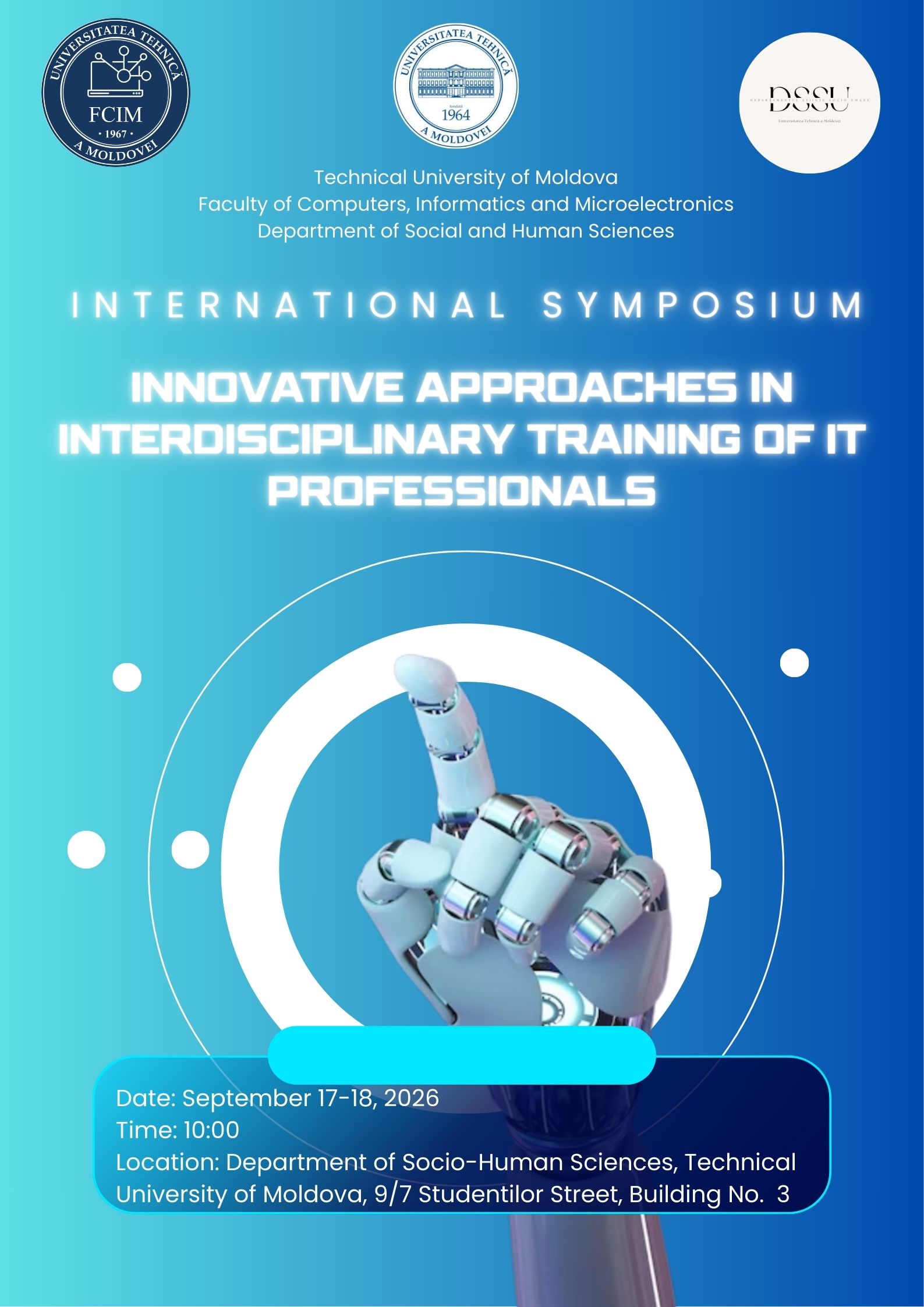
The Department of Socio-Human Sciences within the Faculty of Computers, Informatics and Microelectronics invites teachers, researchers, doctoral students and IT professionals to participate in the International Symposium “Innovative Approaches in the Interdisciplinary Training of IT Professionals”, an event dedicated to promoting interdisciplinary dialogue and collaboration in the education of information technology specialists.
The event will take place on September 17-18, 2026, 10:00 am, Department of Socio-Human Sciences, Chisinau, 9/7 Studentiţilor Street, Building no. 3
In the context of accelerated transformations generated by digitalization, artificial intelligence and global interconnection, the training of IT professionals requires not only advanced technical skills, but also the integration of social, ethical and legal dimensions in the decision-making process. The symposium aims to provide an academic framework for debating these issues and for identifying innovative educational models, oriented towards social responsibility, critical thinking and interdisciplinary collaboration.
The event will facilitate the exchange of ideas between academia and the professional world, contributing to the development of IT education adapted to contemporary challenges and the future of the labor market.
Proposed workshop topics:
Important Deadlines:
May 31, 2026: Abstract Submission (Romanian and English); up to 300 words, according to the form below; form link: https://docs.google.com/forms/d/e/1FAIpQLSfLzQEvqlALk6AAcYoGdPgQZxKY1b2bZbdXDTQExBk1DmFLBQ/viewform
June 5, 2026: confirmation of participation from the organizers
July 31, 2026: submission of the article (5-7 pages), according to the form below. Form link: https://docs.google.com/forms/d/e/1FAIpQLScUhaHMsRc08mDfD8g_PiQMGrKE7C9ll6MT4dlzYsyTlX4wvg/viewform?usp=header
We invite researchers, teachers, PhD students, trainers and IT professionals interested in sending their abstract and article to the following email addresses:
Ecaterina Lozovanu, PhD, Associate Professor: ecaterina.lozovanu@ssu.utm.md
Dina Barcari, PhD, university lecturer: dina.barcari@ssu.utm.md
The symposium is organized within the framework of the Project “Synergy of humanities and engineering fields in the training of IT professionals through innovative interdisciplinary training approaches”, code: 25.80012.0807.54SE, funded by ANCD.

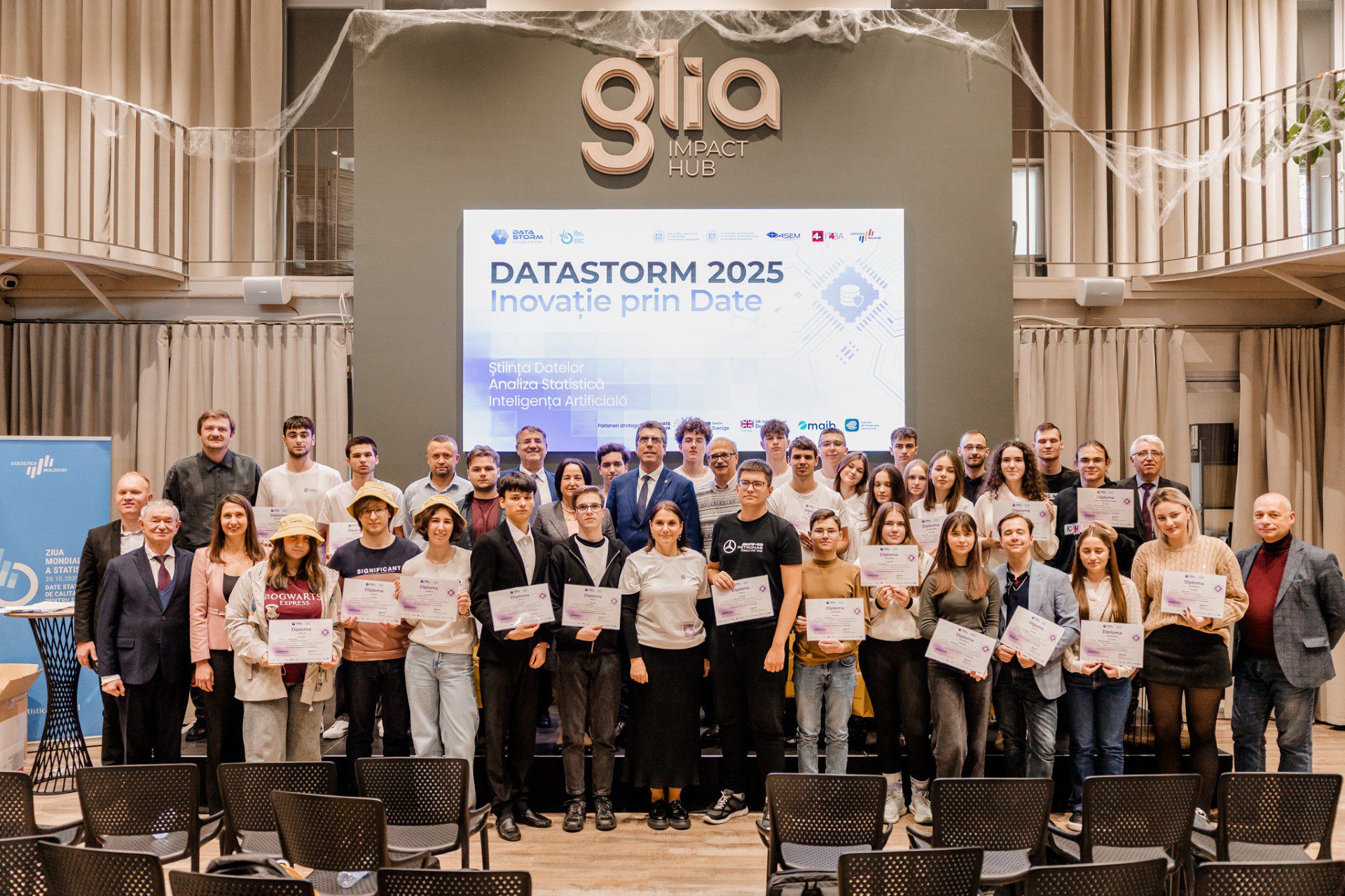
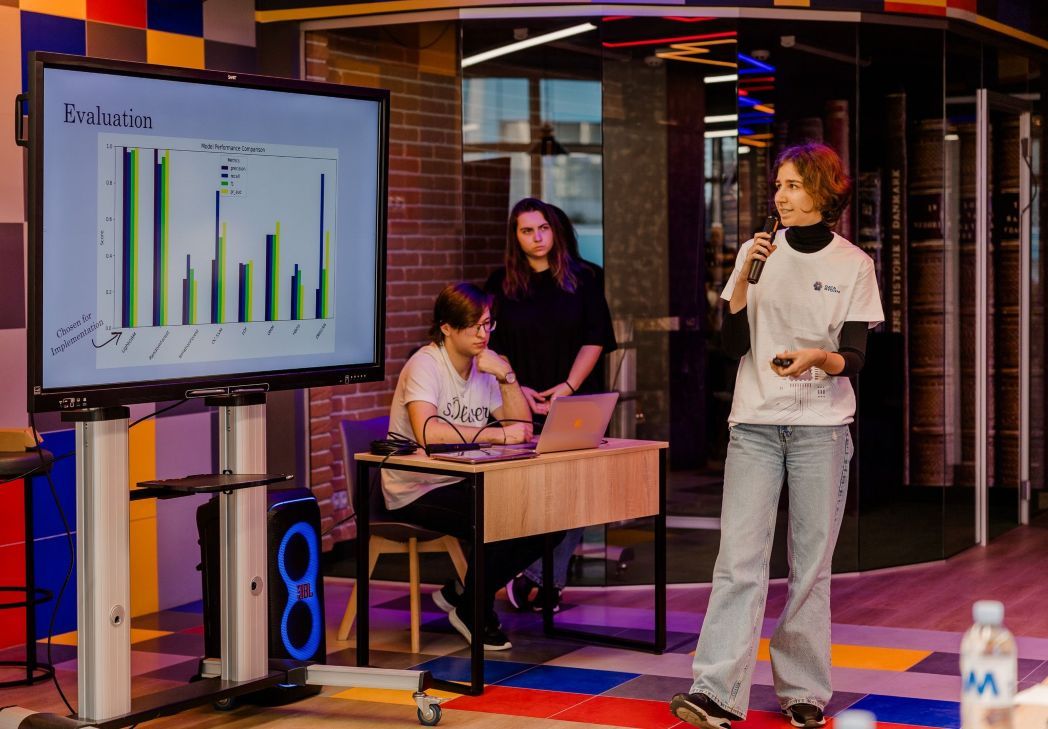
On October 31, 2025, the DATASTORM 2025 – Innovation through Data event took place at the Academy of Economic Studies of Moldova, organized in the context of the World Statistics Day 2025.
The event brought together representatives from academia, the public, and private sectors, providing an excellent platform for collaboration and competition in the fields of data analysis and artificial intelligence.
The team from the Technical University of Moldova, consisting of students Kuzmițkaia Maia (Data Science program), Moroz Alexandr, and Mihova Rima (Applied Informatics program), from the Faculty of Computers, Informatics and Microelectronics, was awarded with third place for developing an innovative platform for the automatic identification and classification of anomalies in financial transactions.
The Faculty of Computers, Informatics and Microelectronics congratulates the team for their performance, professionalism, and innovative spirit.
We are proud of our students’ remarkable achievements and their contribution to advancing data science and digital innovation!
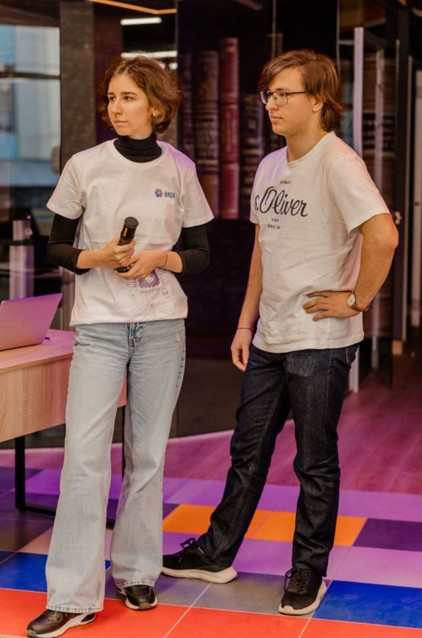

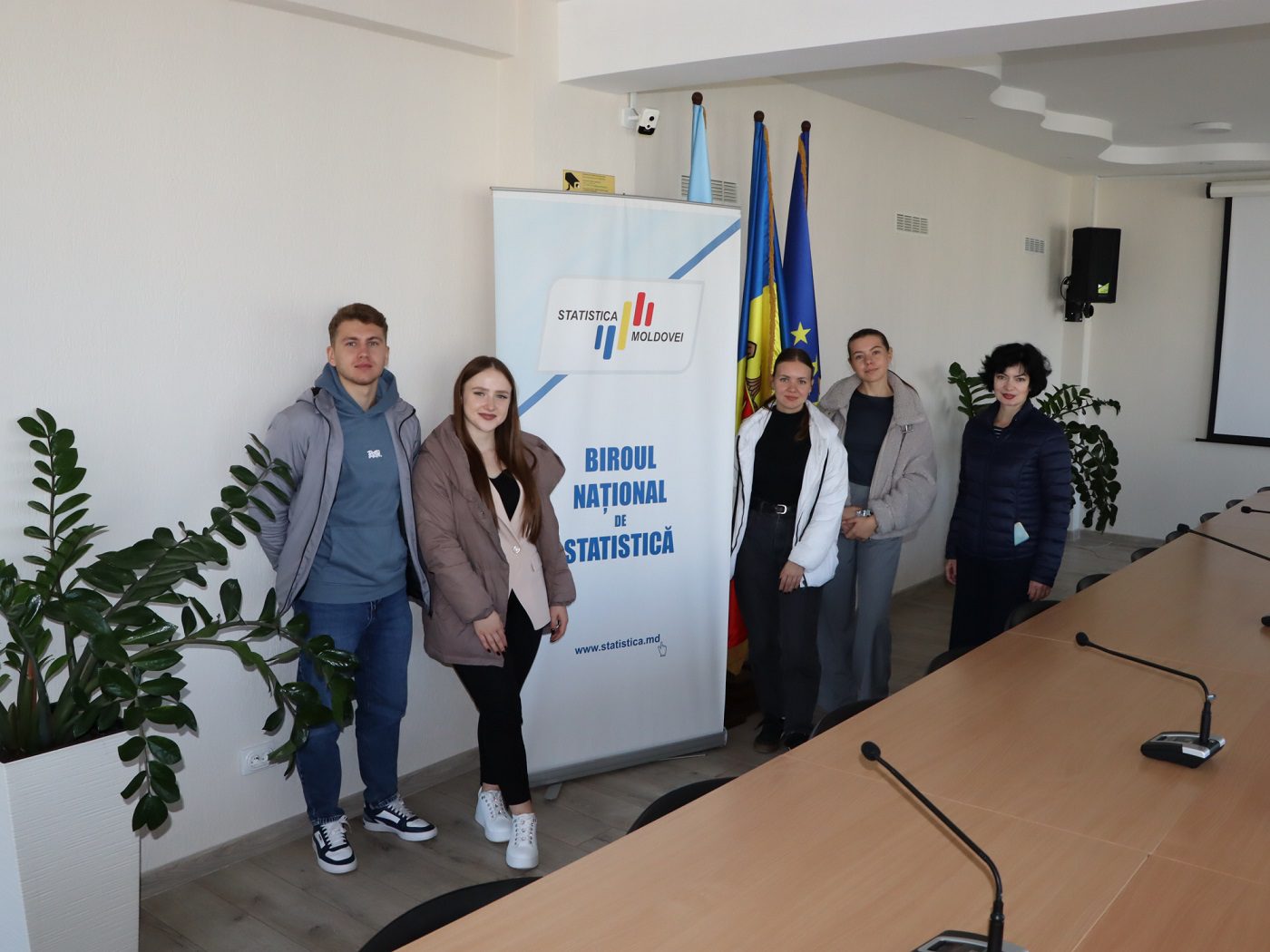
On October 17, 2025, on the occasion of Statistician’s Day—celebrated once every five years on October 20—students from FCIM, majoring in Data Science and Applied Informatics, together with peers from other universities in the Republic of Moldova, participated in the Open Day organized by the National Bureau of Statistics (NBS).
The event offered young participants the opportunity to gain inside perspectives on the institution’s work and the essential role of official statistics in the country’s socio-economic development. The agenda included a guided tour of the NBS headquarters, a presentation of the official website with a focus on efficient information search methods, and a demonstration of the functionalities of the Statistical Data Bank.
Students were also informed about employment opportunities and internship placements available at the NBS. They took part in an interactive Q&A session and a quiz competition, with prizes awarded to the winners.
Throughout the visit, participants engaged with the management team and institutional specialists, who outlined the NBS mission and values, the principles guiding the production of official statistics, and the alignment of these processes with European and international standards. They also emphasized the role of official statistical data in evidence-based public policymaking and in ensuring the sustainable development of society.
The students were introduced to the Paid Internship Program in the public service, designed for young people from the Republic of Moldova and abroad, which aims to deepen theoretical knowledge, develop professional competencies, and foster a responsible attitude toward work in the field of statistics.
Visitors showed particular interest in the modern methods of data collection, processing, and analysis employed by NBS specialists to ensure the quality and relevance of statistical information. Participants received informative materials on the role of statistical data in society and on the professional development opportunities offered by the institution.
The event formed part of the series of statistical education activities carried out by the NBS during 2024–2025, aimed at promoting the importance of official statistics and stimulating young people’s interest in careers in statistics and data science.




Between September 15–20, 2025, the Technical University of Moldova and the National Institute for Innovations in Cybersecurity “Cybercor,” in partnership with the “Nicolae Bălcescu” Land Forces Academy of Sibiu, organized, for the first time, an Autumn School dedicated to cybersecurity. The event brought together over 50 participants – students, master’s candidates, and faculty members from Romania and the Republic of Moldova – in an intensive program of lectures, practical laboratories, and interactive sessions.
The event was held within the framework of the UNDERSEA subproject, coordinated by UTM’s Vice-Rector for Finance and International Relations, Daniela Pojar, and funded by the World Bank through the Government of the Republic of Moldova’s “Higher Education” project.
Among the participating institutions were: the “Nicolae Bălcescu” Land Forces Academy of Sibiu, “Lucian Blaga” University of Sibiu, Transilvania University of Brașov, Politehnica University of Timișoara, the “Gheorghe Lazăr” National College and “Octavian Ghibu” High School of Sibiu, together with the Technical University of Moldova.

The Technical University of Moldova was represented by a delegation including Assoc. Prof. Dr. Dumitru Ciorbă, Dean of the Faculty of Computers, Informatics and Microelectronics; Assoc. Prof. Dr. Andrian Prisăcaru, Faculty of Electronics and Telecommunications; Dr. Ana Țurcan, Vice-Dean of FCIM; and Valentina Astafi, Coordinator of the “Information Security” study program at FCIM.
A central role in coordinating both the theoretical and practical activities was held by Marius Dumitrașcu, Head of the Department of Research, Training and Partnerships at CYBERCOR, who oversaw the full academic and applied dimension of the school. His involvement enabled participants to engage with real-life cybersecurity scenarios and to acquire essential applied skills in the field.
The program of the Autumn School began with sessions focusing on the configuration of working environments and the analysis of current trends in the field. It continued with exercises on topics such as web application security, critical infrastructures, attack and defense techniques, digital forensics, and embedded systems security. The thematic agenda also addressed current issues, including the use of artificial intelligence in cyber conflicts and ransomware behavior analysis through reverse engineering.
The event featured renowned experts from partner companies and institutions, including Robert Bordei and Adrian Stănilă (Visma), Alexandru Domnițeanu (DMI-Automotive), Emil Cebotaroș and Emanuel Strugaru (Cybercor/Codwer), as well as mentors Octavian Magdei and Alexandru Tocan (Cybercor/Codwer).
The final day was dedicated to a Capture the Flag (CTF) competition, where teams tackled complex challenges in the fields of Web, Forensics, Misc, and Reverse Engineering. On the same day, two keynote presentations were delivered: The Human Firewall, presented by Alexa-Ștefana Josephs (DNSC), and Balancing National Cybersecurity and Academic Freedom for Research, presented by Stelian Cristea, Deputy Director of DNSC.
The Autumn School in Cybersecurity concluded with the validation of results, the awarding of participation certificates, and the presentation of future internship and mentoring opportunities, thereby strengthening collaboration between academia and the professional cybersecurity community.