FCIM students discover NLP applications in a lesson held by a guest researcher
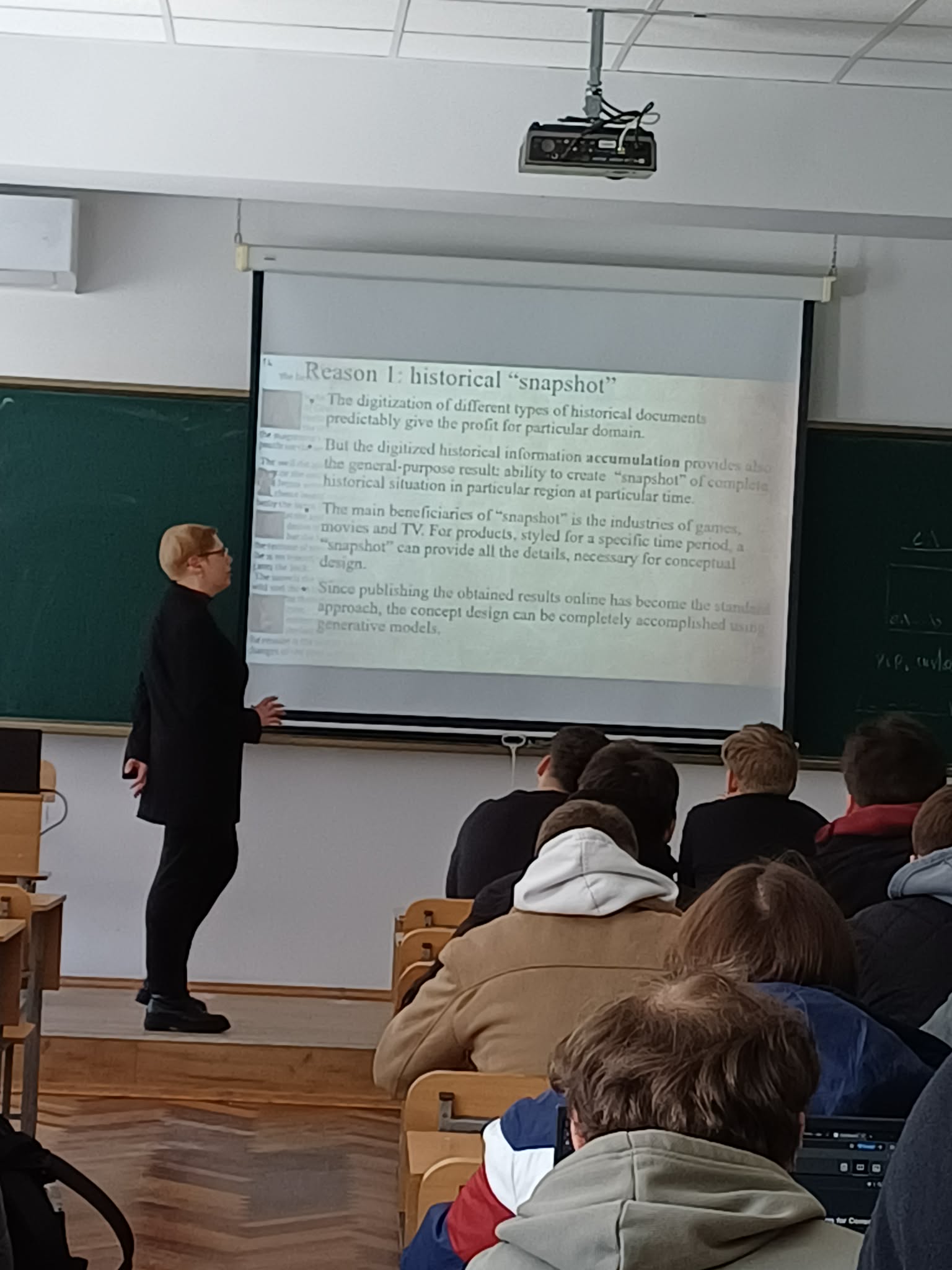
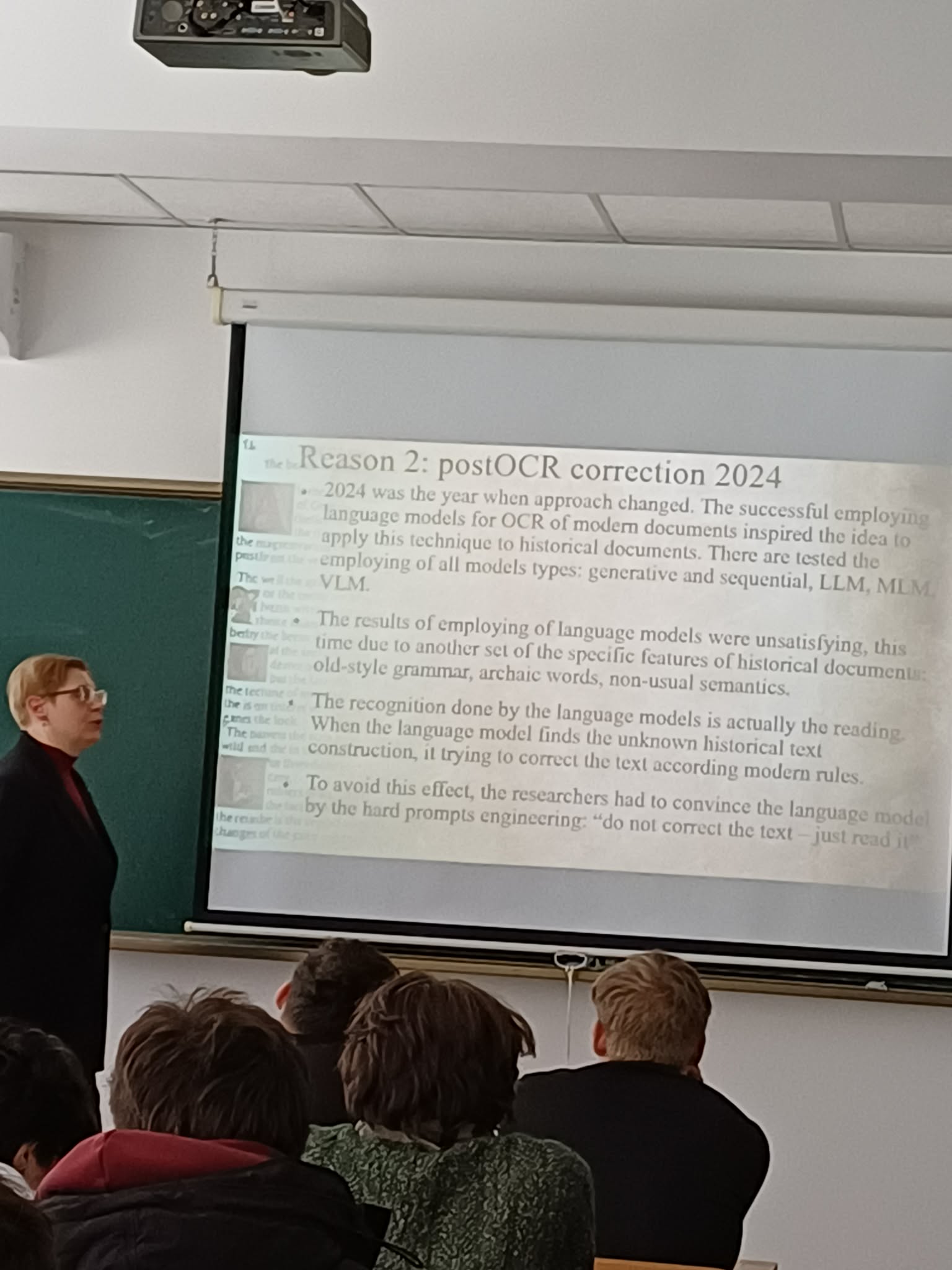
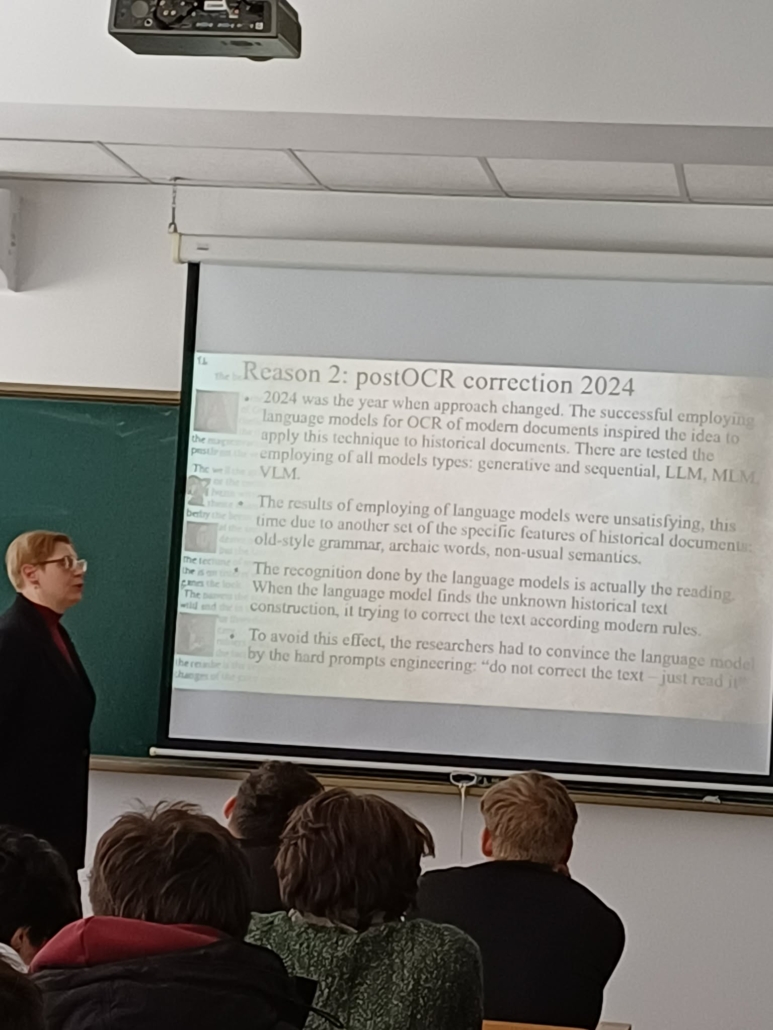
Students of the Applied Informatics specialty at the Faculty of Computers, Informatics and Microelectronics (FCIM), Technical University of Moldova, had the opportunity to participate in a lesson on Computational Linguistics held by Ludmila Burțeva, a researcher at the Institute of Mathematics and Informatics “Vladimir Andrunachievici” in Chișinău. During the presentation, current topics in the field of Natural Language Processing (NLP) were addressed, presenting results and research directions from her scientific activity.
One of the topics of interest concerned the digitization of old Romanian texts, including historical documents written in old Cyrillic, a process that involves modern methods of automatic text recognition and processing. The role of synthetic data generation in developing and training artificial intelligence models when real data sets are limited was also highlighted.
The activity was organized under the guidance of Ms. Braniște Rodica, offering students the opportunity to discover practical applications of NLP technologies in text analysis, intelligent systems development and contemporary research in the field of artificial intelligence.
The Applied Computer Science specialty at FCIM places a special emphasis on natural language processing, an essential area of artificial intelligence that allows computer systems to understand, analyze and generate human language. NLP technologies are the basis of modern digital tools widely used for machine translation, intelligent search, voice interaction with computer systems, sentiment analysis or chatbot development.
By studying these technologies, students acquire relevant skills in textual data analysis, language modeling and application development based on artificial intelligence, skills that are increasingly in demand in fields such as IT, fintech, digital media, education and research.
We thank Ms. Ludmila Burțeva for her captivating presentation and for sharing her research experience with our students. Such activities contribute to strengthening the connection between academia and scientific research, stimulating interest in emerging areas of computer science.