Students from the Faculty of Computers, Informatics, and Microelectronics (FCIM) at the Technical University of Moldova (TUM) continue to distinguish themselves through their achievements in the field of advanced technologies, securing two awards at the 13th edition of the “Student Technical Days” competition. The event took place from November 6–9, 2026, at the Faculty of Automation, Computers, and Electronics of the University of Craiova, Romania.
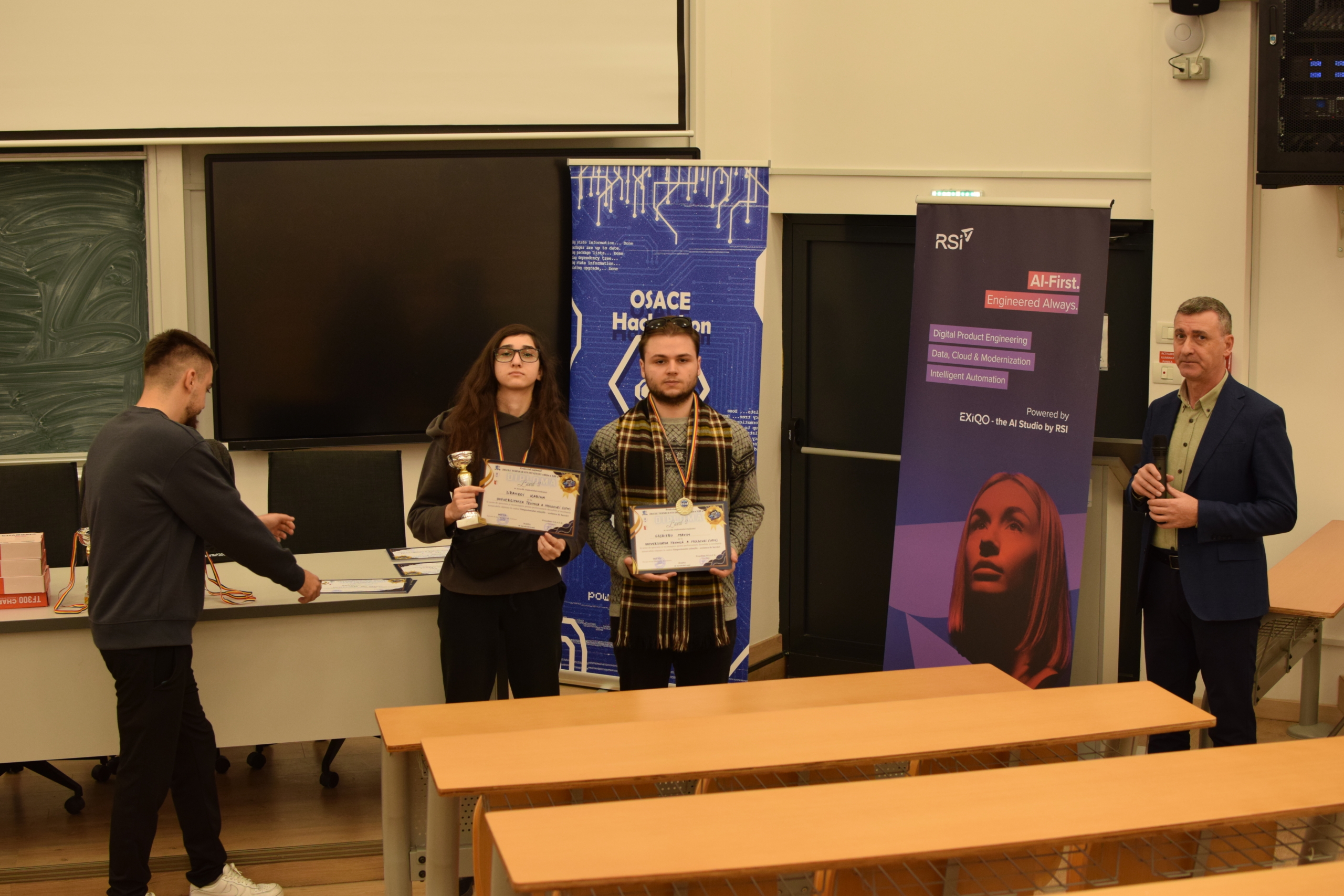
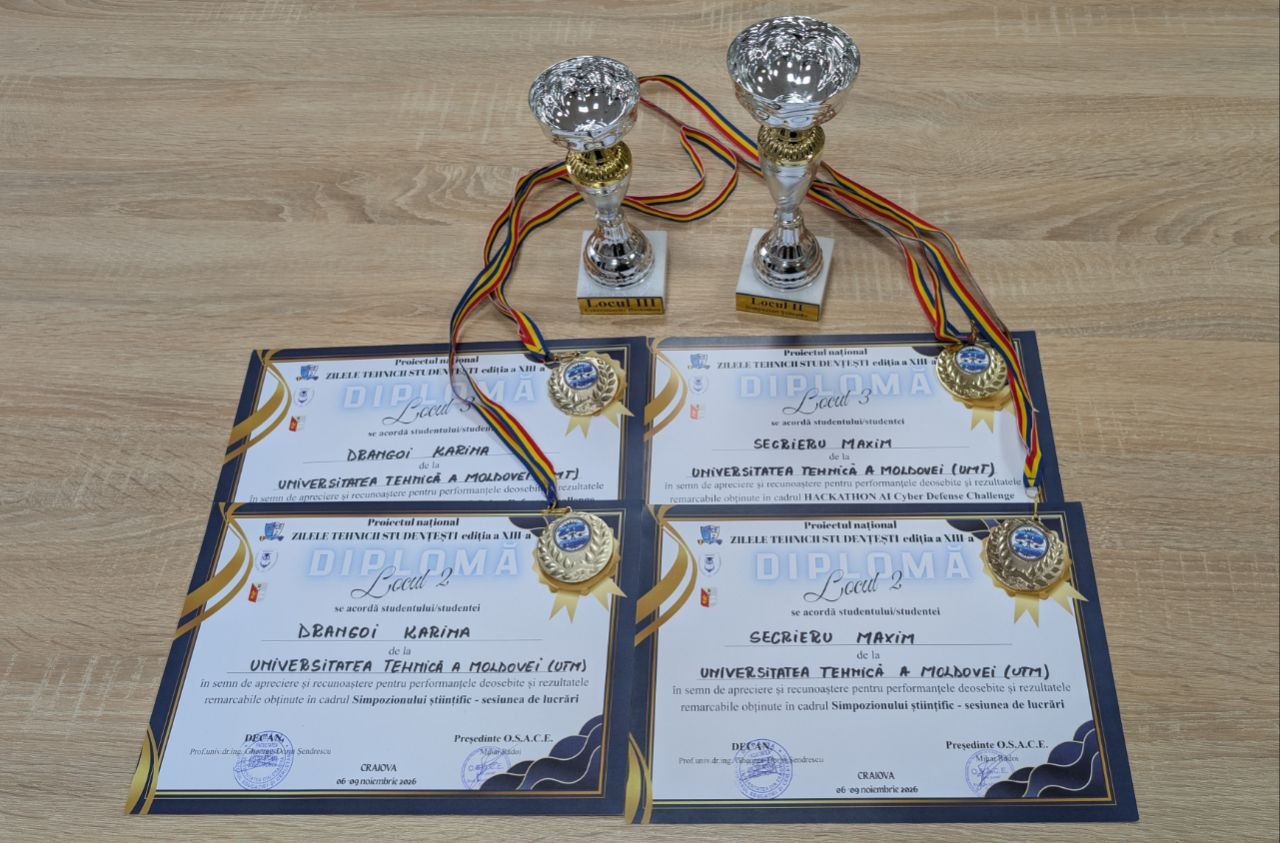
Karina Drangoi, a third-year student, and Maxim Secrieru, a fourth-year student—both enrolled in the Robotics study program—represented FCIM–TUM at the event. They earned 2nd place in the Scientific Symposium and 3rd place in the “AI Cyber Defense Challenge” hackathon. These results highlight both the students’ professional training and their ability to apply the knowledge they have acquired to address current technological challenges. The competition, organized by the University of Craiova in collaboration with the Student Organization of the Faculty of Automation, Computers, and Electronics (O.S.A.C.E.), brought together students from the fields of IT&C, automation, mechatronics, robotics, electronics, and telecommunications. It provided them with the opportunity to present their projects, exchange experiences, and demonstrate their skills through various scientific and practical challenges. Second place at the Scientific Symposium was awarded for the project “EchoPath: A Navigator on a Mixed-Reality Headset for Visually Impaired Individuals,” developed under the guidance of faculty members from the Department of Systems Engineering: Associate Professor Victor Ababii, PhD, and Associate Professor Viorel Cărbune, PhD. The project proposes a technological solution designed to assist visually impaired individuals with orientation and navigation inside buildings, demonstrating how artificial intelligence and mixed-reality technologies can enhance accessibility and user autonomy.
Built on a Meta Quest 3 headset, the EchoPath system integrates image processing, artificial intelligence, and spatial audio to identify obstacles and provide the user with information regarding their location and distance. A key feature is its ability to detect obstacles at head level—hazards that cannot be signaled by a traditional white cane. Furthermore, the system recognizes and reads signage and room numbers in both Romanian and English; it can even identify closed doors by combining visual input with available spatial data. A significant advantage of this solution is its autonomous operation: all processing takes place directly on the device, requiring no internet connection. The prototype was tested with the participation of a visually impaired student and members of an association for the visually impaired, and most of the recommendations gathered during the testing phase have already been implemented. In addition to its developed functionalities, the project stands out for its affordability; the cost of the equipment is estimated at approximately one-tenth of that of comparable commercial solutions. Thus, EchoPath represents not only a technical achievement but also an example of applied research focused on the real-world needs of society.
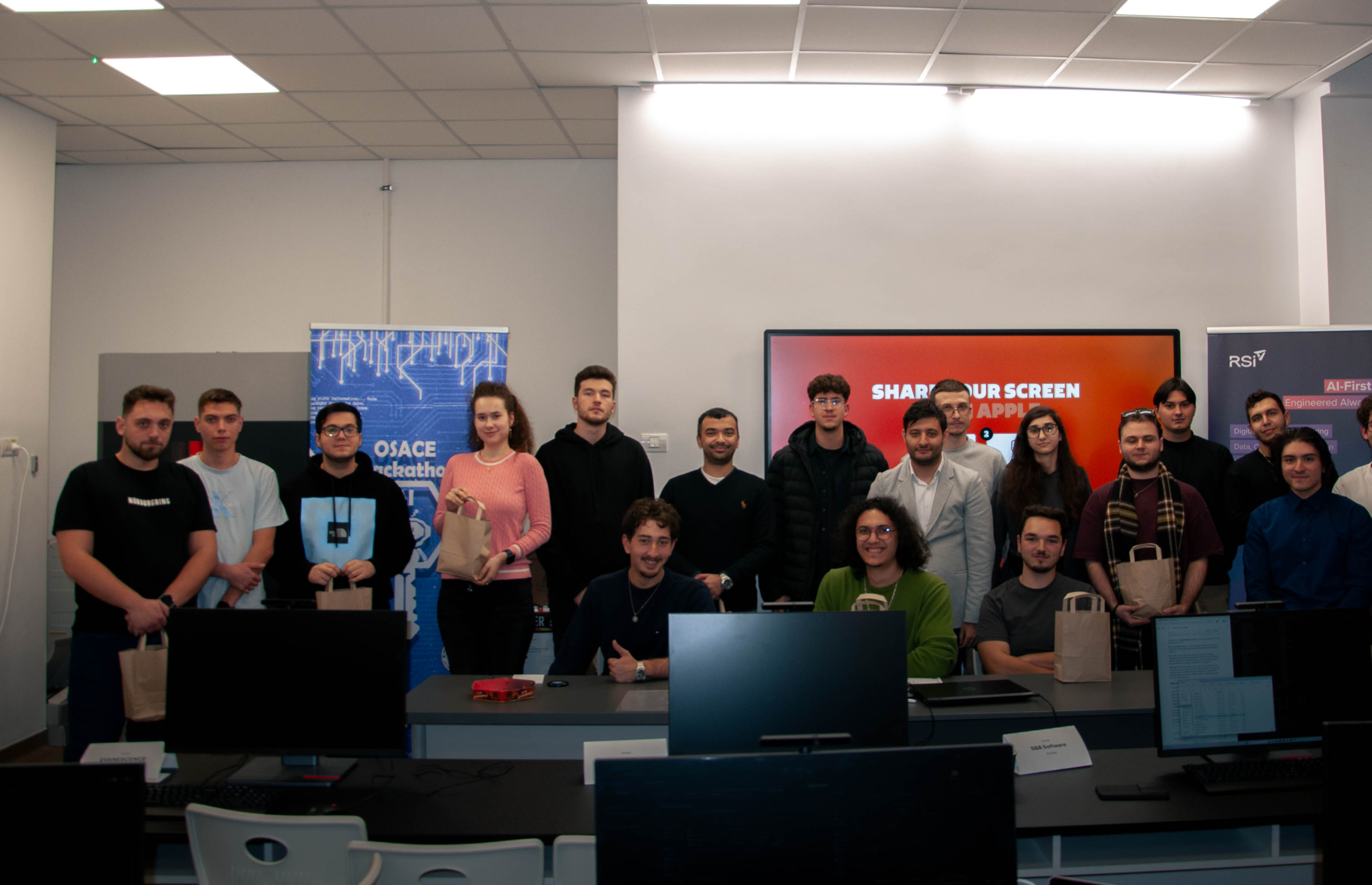
Another significant accomplishment was recorded during the AI Cyber Defense Challenge hackathon, held on November 8, 2026, organized by O.S.A.C.E. in collaboration with the company R Systems and the University of Craiova. In this competition, students from the Faculty of Computers, Informatics, and Microelectronics (FCIM) secured third place, demonstrating proficiency in using artificial intelligence to identify cybersecurity threats.
Participants were tasked with developing artificial intelligence models capable of analyzing network traffic and distinguishing between normal activity and activity associated with cyberattacks. The challenges involved the binary classification of traffic, the identification of nine categories of attacks, and the detection of threats that were unknown to the model during its training phase. Securing a spot on the podium in such a competition confirms the students’ ability to integrate knowledge from the fields of artificial intelligence, data analysis, and network security to solve complex problems.
The Faculty of Computers, Informatics, and Microelectronics congratulates students Karina Drangoi and Maxim Secrieru on their remarkable results, as well as the faculty members who contributed to the realization of the EchoPath project. We wish them further achievements, inspiration, and success in developing innovative solutions that make a positive impact on society!