Archive for category: news

ERASMUS+ Experience in Portugal

Anghelina MARTINIUC, a student at the Faculty of Computers, Informatics and Microelectronics, majoring in “Robotics and Mechatronics”, had an amazing ERASMUS experience – a true personal and academic odyssey.

Anghelina’s decision to study for a semester at the Instituto Politécnico de Bragança (IPB) in Portugal was a courageous step. For her, a student from the Republic of Moldova, this Erasmus+ experience was full of all kinds of bureaucratic obstacles, the most notable being obtaining a study visa in a country without a Portuguese embassy. With a limited budget and short time, she had to travel to a neighboring country to submit the documents. “It was stressful, but after a lot of emotions and efforts, I obtained the visa and managed to get to Bragança, where I had an adventure full of emotions and discoveries,” Anghelina recalls. This determination exemplifies the spirit of initiative and resilience needed to overcome any barrier.

At IPB, Anghelina quickly integrated into the new academic and cultural reality. In addition to the academic challenges specific to the “Robotics and Mechatronics” specialty, everyday life in Portugal brought her a series of pleasant surprises. The Portuguese student card impressed her with its multitude of benefits: substantial discounts in stores, the possibility of paying at the cafeteria, bicycle rental facilities and printing services. These practical aspects considerably simplified the adaptation and allowed her to fully enjoy the experience.

What impressed her most, however, was the kindness and politeness of the people in Portugal. “One of the first and beautiful culture shocks was the way men behaved respectfully towards women – they would automatically open the door and always let them pass first, a simple but considerate gesture.” Even the language barrier was easily overcome, thanks to the kindness of the locals, who, although they did not speak English, helped her with gestures and kindness. These interactions opened up a new perspective on culture and student life for Anghelina, enriching her with valuable lessons about respect and human interaction.

The ERASMUS+ experience was much more than a series of courses and exams for Anghelina. It was an opportunity for deep personal development, to step out of her comfort zone and adapt to a completely different culture. She met wonderful people from all over the world, significantly expanding her network of contacts and improving her intercultural skills. Learning was not limited to the classroom; daily interaction with international and local colleagues was a school of life in itself.

“ERASMUS+ has been one of the most important and beautiful experiences of my life so far. Although the beginning was full of difficulties, everything that followed was fully worth it. I grew, I learned, I discovered and, most importantly – I discovered myself”, concludes Anghelina.

Anghelina MARTINIUC’s message for future ERASMUS students is clear: the program is an investment in yourself. The challenges are inevitable, but the rewards are immense: a global perspective, intercultural skills, an extensive network of contacts and a deeper understanding of your own potential.

Are you ready to turn your dreams into reality and embark on your own ERASMUS+ odyssey?


FCIM DISA at West Attica University Athens, Greece

During the period 16-20 June 2025, Assoc. Prof., PhD, Head of ISA Department Ion FIODOROV, Assoc. Prof., PhD Irina Cojuhari together with PhD students Nadejda PALAMARCIUC and Maria ROTARU paid a visit to West Attica University in Athens, Greece, where they participated in the first edition of the Educational Erasmus+/ICM Week for PhD Students and Supervisors, organized in the context of the Erasmus+ International Mobility Program. The program included teaching and training activities, as well as an interdisciplinary teaching laboratory “Designing the Future of Learning” supervised by Prof. Theodoros Xanthos, Vice Rector for International Relations.

In accordance with the program, co-teaching and research activities were carried out, the subject of discussions being the impact of research, collaborative, innovative and reflective practices, aiming at personal, professional and academic development.

During the teaching activities, PhD student Maria ROTARU presented the topic entitled “Monte Carlo Modeling in Network Reliability Analysis”, offering a perspective on the applicability of this technique in the field of network engineering. Also, PhD student Nadejda PALAMARCIUC gave a lecture addressed to the students of the host university, in which she highlighted the differences between the methods of minimizing logical functions: the Quine method and the Quine-McCluskey method.

Professor Ion FIODOROV taught the lesson on the topic “Mathematical Modeling of Systems and Processes. Stability of Automatic Systems”, completing it with an ad-hoc presentation on the topic “Hamming Coding”, and Associate Professor Irina COJUHARI gave a lecture dedicated to the topic “Stack Memory Automata”, offering students an introduction to the fundamental concepts of this field.

An interdisciplinary educational workshop entitled “Interdisciplinary Teaching Lab: Designing the Future of Learning” took place during the mobility. The activity brought together doctoral students and academics from four countries: the Republic of Moldova, Georgia, Armenia and Ukraine, creating four multinational teams in which each country was represented.

The main objective of this workshop was to engage participants in a collaborative, interdisciplinary educational challenge that would integrate innovation, technology and sustainability in the design of university courses of the future, emphasizing cultural and academic diversity. Participants, in teams, discussed their vision of education in 2050, with a focus on the role of technology, AI and international collaboration. As a result, each team co-designed an interdisciplinary university mini-course, including: “Data science for a sustainable society”, “IT approaches to the real life” and “Sustainability of the process from crop to fork”.

This mobility proved to be particularly valuable for the teaching staff and researchers of the Faculty of Computers, Informatics and Microelectronics, offering them the opportunity to familiarize themselves with the organization of doctoral studies at UniWA University, the existing challenges, as well as the good practices implemented. At the same time, the participants had the opportunity to share their own academic and research experience. This collaboration promises important results in the field of education and research and creates new opportunities for academic exchanges, research and innovation for UTM students and professors.

The official opening of the CROSSCOMP 2.0 project – a new step towards future-oriented technical training

On June 19, 2025, the official opening of the CROSSCOMP 2.0 project – Upgrade of the Cross-Border Regional Hub of Competences for the Automotive Industry for Green and Digital Emerging Trends took place in Iași, a strategic initiative aimed at strengthening technical training in the field of automotive engineering, in the context of the transition to a green and digital industry.

The project opening event was organized by the “Gheorghe Asachi” Technical University of Iași (TUIASI), in partnership with the Technical University of Moldova, and brought together representatives of both institutions, the economic environment and the university community.

b2621911 cd84 419d 8880 1597a3f5a141

The Faculty of Computers, Informatics and Microelectronics was represented by assoc. prof. dr. Dumitru Ciorbă, and the project coordinator from UTM is assoc. prof. dr. Nicolai Ababii.

The project is financed by the Interreg VI-A NEXT Romania-Republic of Moldova Programme, with a total budget of 849,991.49 euros and an implementation period of 24 months. Overall, the project is coordinated by assoc. prof. dr. Nicolae Lucanu (TUIASI) and aims to:
develop a common educational strategy for integrating green and digital trends into technical training programmes,
create a joint master’s programme with a double degree in Applied Electronics,
modernise three specialised laboratories in both universities,
strengthen the relationship between the university and industry in training the future workforce.
Representatives of Continental and Schaeffler companies, present at the event, supported the initiative, highlighting the importance of aligning university curricula with the current requirements of the automotive industry.

d43a445b a0ab 4272 bbbf 6ec746269ec4

In conclusion, the project coordinator, assoc. prof. dr. Nicolae Lucanu, stated: “CROSSCOMP 2.0 continues an initiative successfully launched under the previous program, taking forward the vision of a cross-border educational hub focused on innovation, relevance and real collaboration with industry.”
The event ended with a technical meeting of the project teams, marking the beginning of a consolidated collaboration in support of modern engineering education, connected to the real requirements of an industry in continuous transformation.

Cybersecurity workshop with Microsoft expert Mihai George Forlafu

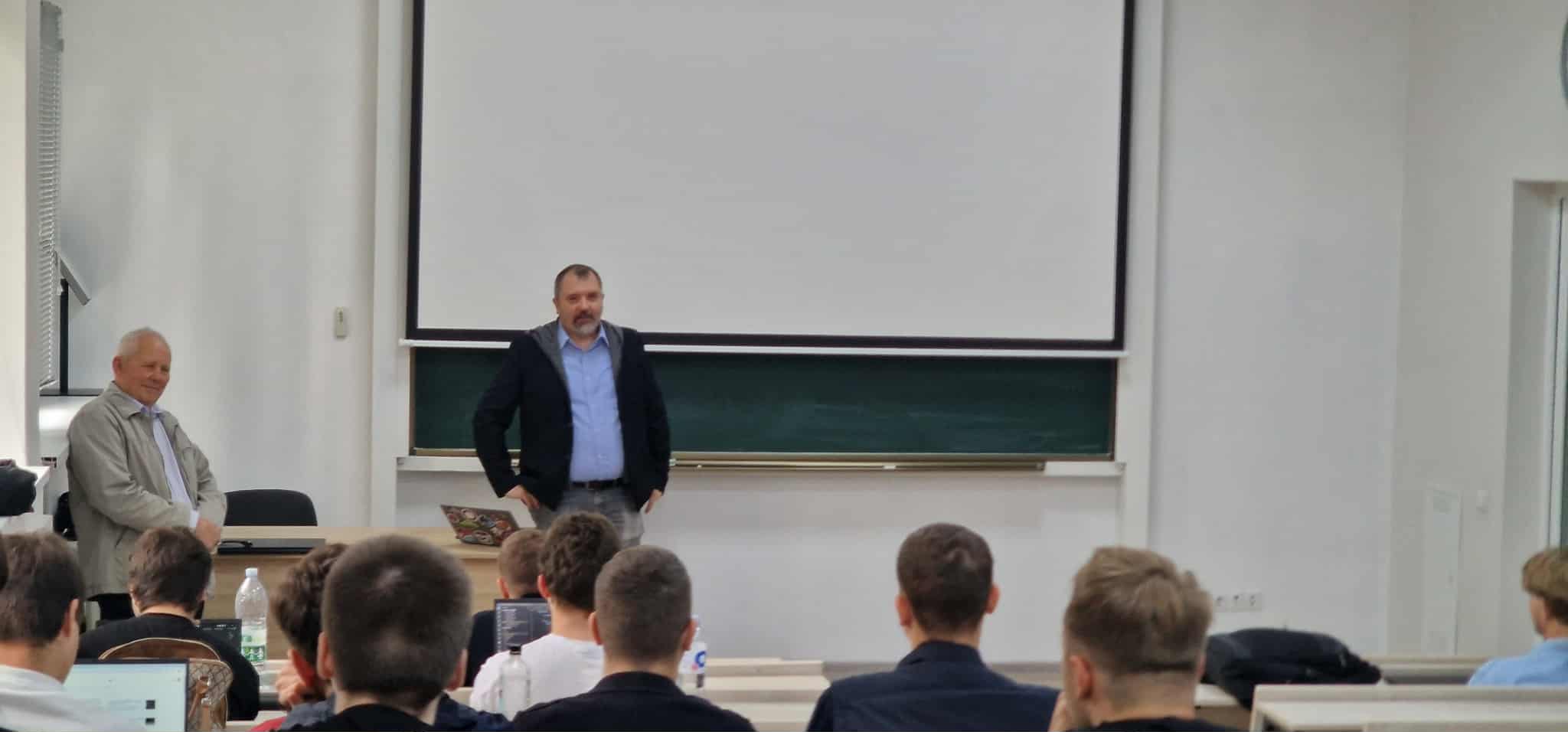
On June 11, 2025, the Faculty of Computers, Informatics and Microelectronics hosted the workshop “Domain Trends and Labor Market Evolution for Cybersecurity Professionals“.

Special guest Mihai George Forlafu, Senior Cybersecurity CSA at Microsoft, who responded to our faculty’s invitation to share his professional experience and discuss the latest trends in the field.

The presentation addressed essential topics such as:

  • the challenges of hybrid IT infrastructures (cloud + local),
  • reducing the attack surface and managing access,
  • using artificial intelligence in cyber defense,
  • the growing threat of ransomware attacks,
  • implementing the Zero Trust concept.

Participants had the opportunity to understand not only the current technical aspects, but also how these changes influence the labor market. The increasingly in-demand skills in cybersecurity, growing fields, and development directions for young professionals were discussed.

The event was well-attended, bringing together students, faculty, and IT specialists in a valuable exchange of ideas and perspectives.

Innovation and Inspiration: The “Sergiu Rădăuțan” Contest Propels Future Generations of Engineers

The future of microelectronic and biomedical engineering shone brightly on Friday, May 30, 2025, at the Tekwill ICT Excellence Center, where the 14th edition of the prestigious International Student Contest “Microelectronic Systems Engineering – SERGIU RĂDĂUȚAN” took place. Dedicated to the memory of academician Sergiu Rădăuțan, founder of the Technical University of Moldova, the event brought together 34 enthusiastic student teams from the Republic of Moldova and Romania, along with over 100 professors, sponsors, and industry experts.

Organized by the Department of Microelectronics and Biomedical Engineering of the Faculty of Computers, Informatics and Microelectronics, TUM, the competition aims to develop practical skills and promote innovation among young people. From microelectronic system design and applied electronics to robotics, microcontroller-based systems, and biomedical engineering, students had the opportunity to demonstrate their creativity and theoretical knowledge through practical applications.

A strong supporter of this initiative is the rector of TUM, Prof. Dr. Habil. Viorel BOSTAN. His vision emphasizes the critical importance of such events in shaping future generations of engineers. The “Sergiu Rădăuțan” Contest serves not only as a major competition platform but also as a catalyst for inspiration and motivation, encouraging students to explore the boundaries of innovation and apply their knowledge to real-world solutions. The active involvement of the TUM leadership, exemplified by the support of Rector Viorel BOSTAN, highlights the essential role of practical education and collaboration between academia and industry.

The contest opening featured welcome addresses from notable academic and industry figures, including the contest founder, Prof. Dr. Victor ȘONTEA; Vice-Rector for Research at TUM, Prof. Dr. Habil. Vasile TRONCIU; Head of the Department of Microelectronics and Biomedical Engineering, Prof. Dr. Habil. Oleg LUPAN; Dean of the Faculty of Computers, Informatics and Microelectronics, Assoc. Prof. Dr. Dumitru CIORBĂ; Executive Director of the Association of Electronic Companies of Moldova, Elena MAEVSKI; and Assoc. Prof. Dr. Serghei RAILEAN, president of the organizing committee. This strong presence underscores the commitment of the academic and business communities to nurturing young talent.

The competition was structured into two stages: an oral project presentation, followed by a demonstration of the functionality of the microelectronic and biomedical devices and systems in front of a panel of experts. This format enabled a comprehensive evaluation of the projects, from concept to implementation.

This year’s edition received generous support from a wide range of sponsors and partners, once again demonstrating a solid collaboration between academia and the private sector: the Alumni Society in Microelectronics of TUM, the Biomedical Engineering Society of Moldova, the Association of Electronic Companies of Moldova (ACEM), Mechatronics Innovation Center SRL, Invitro Diagnostics SRL, ITC Informbusiness SRL, LED Market SRL, Whetec SRL, BSW TECH SRL, Microchip Technology SRL, Aproservice-X SRL, General-PC SRL, MedLux Group SRL, AMS-2000 SRL, Lokmera SRL, and DJV-Com SRL.

The awards recognized originality, technical complexity, and practical applicability of student projects and included diplomas, electronic equipment, cash prizes, and educational materials.

AWARD LIST – Sponsored by the Technical University of Moldova

Section I: Electronic Systems Engineering

  • First Prize – RUDAC Robert, “Gheorghe Asachi” Technical University of Iași, Romania, for “Storage and use of kinetic energy from a flywheel to power a consumer via an AC voltage converter”

  • Second Prize – CEBOTARI Dumitru, Center of Excellence in Energy and Electronics, Moldova, for “SimpleECU”

  • Third Prize – MELCHIOR Christian, Transilvania University of Brașov, Romania, for “Autonomous UAV system for identifying and aiding survivors”

Section II: Biomedical Systems Engineering

  • First Prize – FARKAS Izabella, Transilvania University of Brașov, Romania, for “Integrated system for fetal heart rate monitoring: design, implementation, and evaluation”

  • Second Prize – ANATI Serghei, Technical University of Moldova, for “Device for rehabilitation of children with ASD and ADHD”

  • Third Prize – JEAN Budry Smark Randy, Transilvania University of Brașov, Romania, for “Assisted diagnosis system for diabetic retinopathy”

    AWARD LIST – Sponsored by Partners and Industry Donors

    Section I: Biomedical Systems Engineering

    • AMS-2000 SRL, First Prize – FARKAS Izabella, Transilvania University of Brașov, Romania, “Integrated system for fetal heart rate monitoring: design, implementation, and evaluation”

    • AMS-2000 SRL, Second Prize – MÎRZA Mihail, COLEI Leonid, Technical University of Moldova, “Rehabilitation and communication skills development methods for patients with ASD using specialized communicators”

    • Mechatronics Innovation Center SRL, First Prize – LUNGU Nicoleta-Irina, Transilvania University of Brașov, Romania, “Design and implementation of a muscle recovery device using vibration therapy”

    • Mechatronics Innovation Center SRL, Second Prize – JEAN Budry Smark Randy, Transilvania University of Brașov, Romania, “Assisted diagnosis system for diabetic retinopathy”

    • Invitro Diagnostics SRL, First Prize – AXENTII Stanislav, DIACONU Cătălin, Technical University of Moldova, “DiAxTic”

    • Invitro Diagnostics SRL, Second Prize – LEPĂDATU Maria-Magdalena, Transilvania University of Brașov, Romania, “Phototherapy device for improving dermatological conditions”

    • Invitro Diagnostics SRL, Third Prize – JEBRIL Ahmed, Transilvania University of Brașov, Romania, “Design and implementation of a digital stethoscope”

    • Lokmera SRL, First Prize – UNGUREANU Gabriel-Stelian, RĂDEANU Larisa-Gabriela, ARON Mihai, “Grigore T. Popa” University of Medicine and Pharmacy, Romania, “Multichannel ECG signal acquisition device”

    • Biomedical Engineering Society of Moldova, First Prize – SUȘIŢCAIA Elena, CHIRIAC Alexandr, CHEPTENE Andrian, Technical University of Moldova, “Development of an educational device for Braille literacy in visually impaired individuals”

    • Biomedical Engineering Society of Moldova, Second Prize – RĂDEANU Larisa-Gabriela, REZMERIȚĂ Tudor-Andrei, CHIȚANU Dragoș, “Grigore T. Popa” University of Medicine and Pharmacy, Iași, Romania, “Electronic device for measuring skin hydration levels”

    • MedLux Group SRL, First Prize – LINGEA Alina, Transilvania University of Brașov, Romania, “EMG-based control of a prosthetic hand”

    • MedLux Group SRL, Second Prize – BURSACOVSCHI Andrei, UNGUREANU Gabriel-Stelian, ARON Mihai, “Grigore T. Popa” University of Medicine and Pharmacy, Romania, “Arduino-controlled muscle stimulator”

    • Microchip Technology SRL, First Prize – AXENTII Stanislav, DIACONU Cătălin, Technical University of Moldova, “DiAxTic”

    • Microchip Technology SRL, Special Mention – MÎRZA Mihail, COLEI Leonid, Technical University of Moldova, “Rehabilitation and communication skills development methods for patients with ASD using specialized communicators”

    Section II: Electronic Systems Engineering

    • Mechatronics Innovation Center SRL, First Prize – PROCOP Maxim, Technical University of Moldova, “Acoustic levitator”

    • Mechatronics Innovation Center SRL, Second Prize – SECRIERU Maxim, DONESCO Alina, ȘEVCIUC Roman, MARINOV Nicolai, Technical University of Moldova, “EcoSort AI”

    • Mechatronics Innovation Center SRL, Third Prize – SOFRONI Maxim, CEBOTARENCO Cristian, Technical University of Moldova, “Laboratory stand based on Mitsubishi-Electric equipment with PLC-controlled conveyor”

    • ITC Informbusiness SRL, First Prize – ROMAN Alin Gabriel, JALLAD Jamil, CAPRA-GRIGORIU Teodora, LUNGU Miruna Ștefania, “Gheorghe Asachi” Technical University of Iași, Romania, “SmartVision Glasses”

    • ITC Informbusiness SRL, Second Prize – VLASE Eduard-Alexandru, PETRESCU Octavian-Ștefan, SPULBER Oana-Raluca, “Gheorghe Asachi” Technical University of Iași, Romania, “Fuzzy control system for wine fermentation”

    • ITC Informbusiness SRL, Third Prize – ANDREEV Roman, Technical University of Moldova, “Multifunctional plotter”

    • LED Market SRL, First Prize – PANTELEMON Tudor Daniel, SPULBER Oana-Raluca, “Gheorghe Asachi” Technical University of Iași, Romania, “Off-grid short/medium/long range communication modules”

    • LED Market SRL, Second Prize – MIHAILA Cristian, SÎRGHE Mihai, “Mircea Eliade” Theoretical High School, Moldova, “Intelli Ecosystem”

    • LED Market SRL, Third Prize – DANILIUC Iulian, Center of Excellence in Energy and Electronics, Moldova, “ScamMat360”

    • BSW TECH SRL, First Prize – ANDREEV Roman, Technical University of Moldova, “Multifunctional plotter”

    • BSW TECH SRL, Second Prize – COLESNIC Iulian-Anj, Technical University of Moldova, “Vision Aid 2.0”

    • Invitro Diagnostics SRL, First Prize – LOZINSCHI Andrei, CULEV Veaceslav, PONTELEICIUC Cornel, Technical University of Moldova, “Spider Robot”

    • Invitro Diagnostics SRL, Second Prize – CHEPTENE Andrian, RAILEAN Alexandru, Technical University of Moldova, “Energy consumption monitoring system with remote control”

    • Invitro Diagnostics SRL, Third Prize – PROCOP Maxim, Technical University of Moldova, “Acoustic levitator”

    • Whetec SRL, First Prize – RAILEAN Alexandru, CHEPTENE Andrian, Technical University of Moldova, “Magnetic mixing device”

    • Whetec SRL, Second Prize – MUNTEANU Andrei, SILOAE Casian, Transilvania University of Brașov, Romania, “Mechatronic system for optimizing plant growth in artificial habitat”

    • Lokmera SRL, First Prize – CRIVIȚCHI Vladislav, Technical University of Moldova, “Automatic control system for honey extraction”

    • Lokmera SRL, Second Prize – ROMANENCO Evghenii, Technical University of Moldova, “Fault detection device for power cables”

    • Aproservice-X SRL, First Prize – NISTOR Ciprian Alexandru, Transilvania University of Brașov, Romania, “Candy robot”

    • Aproservice-X SRL, Second Prize – NISTOR Ciprian Alexandru, Transilvania University of Brașov, Romania, “Musical synthesizer”

    • Microchip Technology SRL, Second Prize – DANILIUC Iulian, Center of Excellence in Energy and Electronics, Moldova, “ScamMat360”

    • Microchip Technology SRL, Third Prize – PROCOP Maxim, Technical University of Moldova, “Acoustic levitator”

    • Microchip Technology SRL, Special Mention – CEBOTARI Dumitru, Center of Excellence in Energy and Electronics, Moldova, “SimpleECU”

    • DJV-Com SRL, First Prize – MELCHIOR Christian, Transilvania University of Brașov, Romania, “Autonomous UAV system for identifying and aiding survivors”

    • General-PC SRL, First Prize – SECRIERU Maxim, DONESCO Alina, ȘEVCIUC Roman, MARINOV Nicolai, Technical University of Moldova, “EcoSort AI”

    • General-PC SRL, Second Prize – SOFRONI Maxim, CEBOTARENCO Cristian, Technical University of Moldova, “Laboratory stand with Mitsubishi-Electric PLC conveyor”

    • General-PC SRL, Third Prize – CHEPTENE Andrian, RAILEAN Alexandru, Technical University of Moldova, “Energy consumption monitoring system with remote control”

    • Alumni Society in Microelectronics of TUM, First Prize – ANDREEV Roman, Technical University of Moldova, “Multifunctional plotter”

The International Student Contest “Microelectronic Systems Engineering – SERGIU RĂDĂUȚAN” remains a cornerstone in engineering education throughout the region, offering a crucial platform for talent development and innovation. Through initiatives like this, the future of engineering looks bright.

Congratulations to all awardees, participants, and faculty for their effort and dedication!

Technical Scientific Conference of Undergraduate, Master and PhD Students of the Technical University of Moldova, 2025 edition

Between May 14–16, 2025, the Faculty of Computers, Informatics and Microelectronics of the Technical University of Moldova once again demonstrated its excellence by actively participating in the annual edition of the Technical Scientific Conference of Undergraduate, Master and PhD Students. This event, included in the academic calendar of UTM, brought together over 300 young researchers from six countries, representing a reference platform for the presentation of innovations and the exchange of advanced ideas.

Over the three days, participants delivered 229 scientific presentations, structured into 7 thematic sections and subsections:

  • Software Engineering and Security
  • Systems Engineering
  • Computer Science
  • Microelectronics and Nanotechnologies
  • Databases
  • Biomedical Engineering
  • Socio-Human Sciences

Each session, moderated by faculty members, combined scientific presentations with interactive discussions, stimulating constructive dialogue and generating valuable feedback.

The conference was attended by young researchers from:

  • The Republic of Moldova – students, master’s and doctoral students, representing the majority of the faculty’s academic community;
  • Romania, the United States, the Netherlands and Germany – a sign of openness and cross-border collaboration.

The papers presented addressed current topics, from artificial intelligence and digital technologies to urban sustainability and innovations in industry. The discussions generated and the exchange of opinions facilitated the shaping of joint projects and scientific partnerships, contributing to the consolidation of research networks. And the international presence stimulated collaborations and new perspectives in research projects on data security, microelectronics, nanotechnologies and intelligent systems.
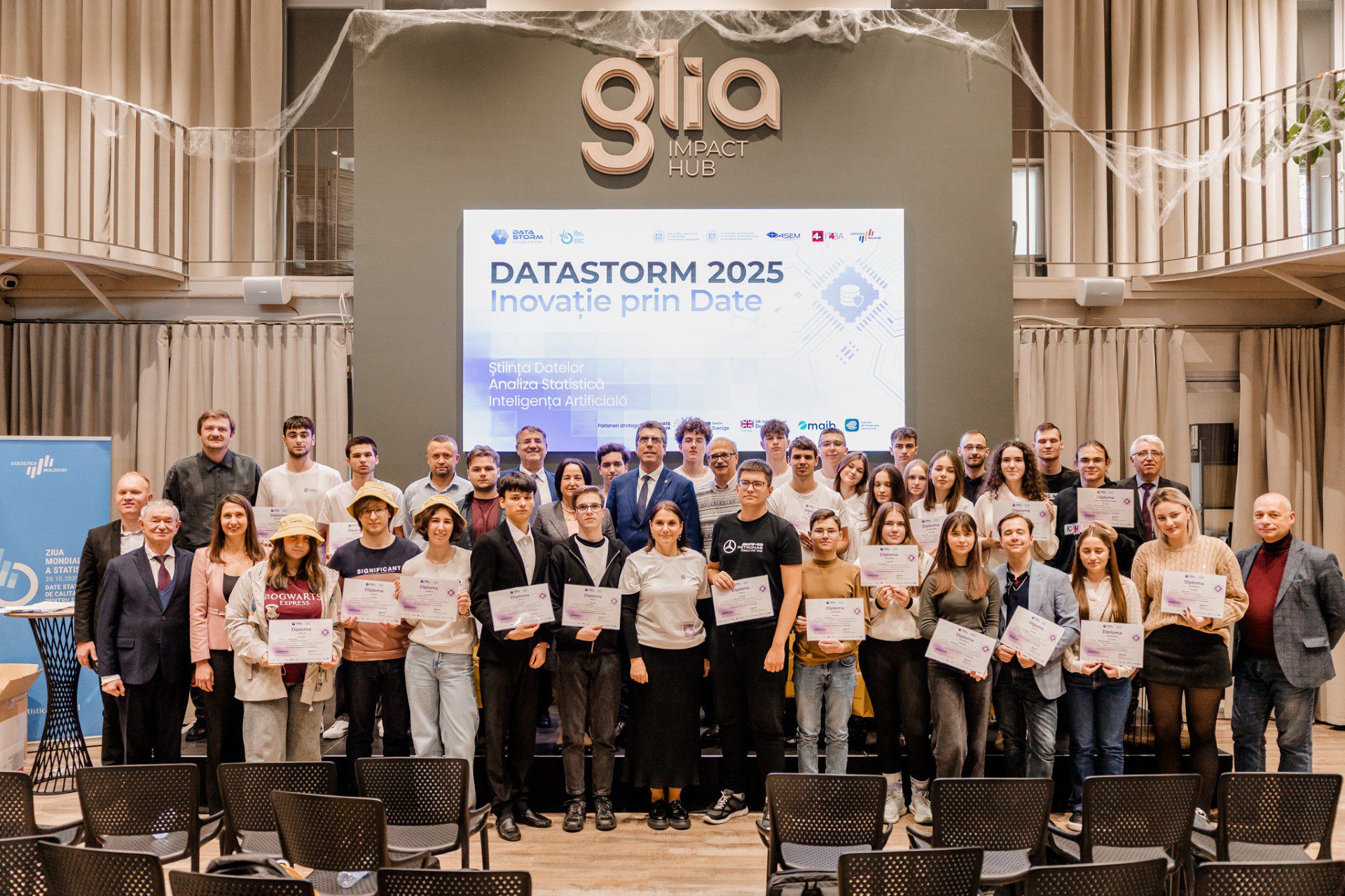
We express our gratitude to the scientific committee, organizers and section moderators for the professionalism and dedication they demonstrated, ensuring the smooth running of the event at the highest academic standards.

Through this conference, UTM reaffirms its commitment to supporting excellent research and to offering young specialists real opportunities for development and international collaboration.

FCIM-UTM visit to UTCN: boost to research and innovation

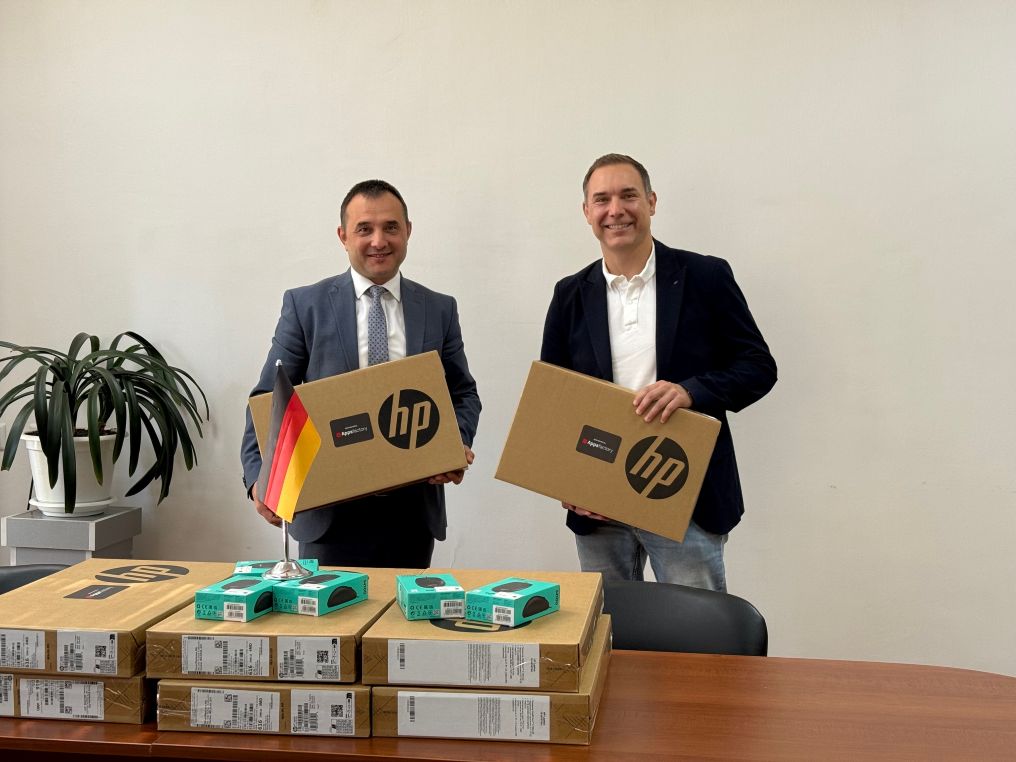
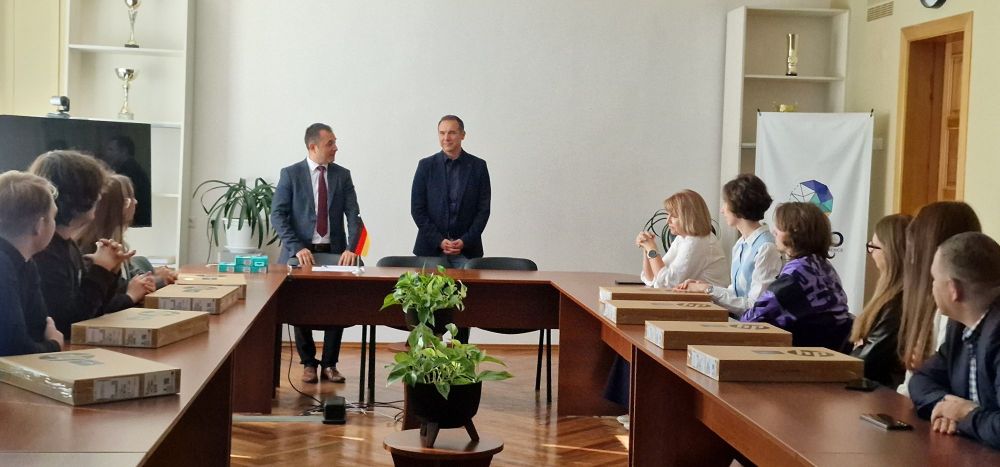
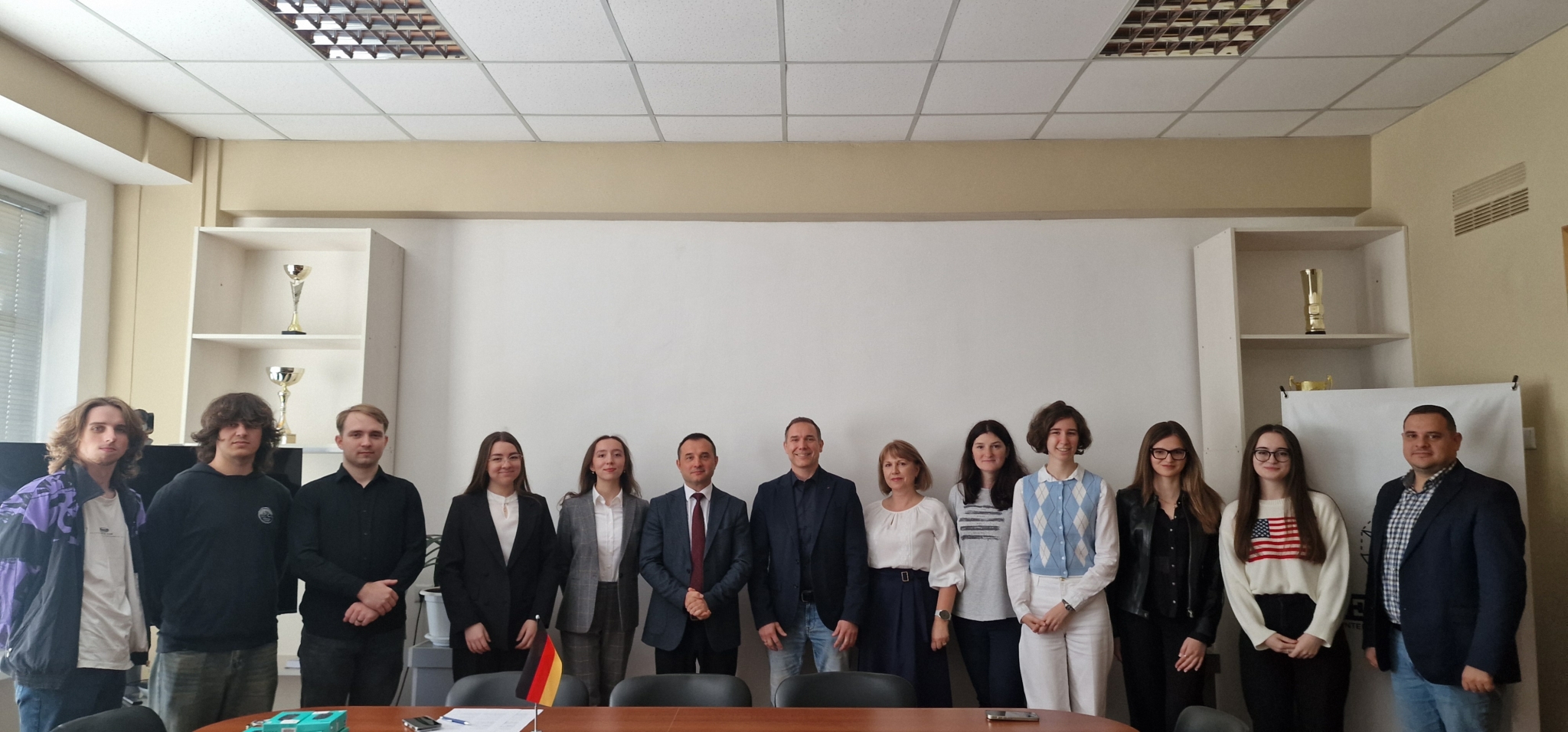
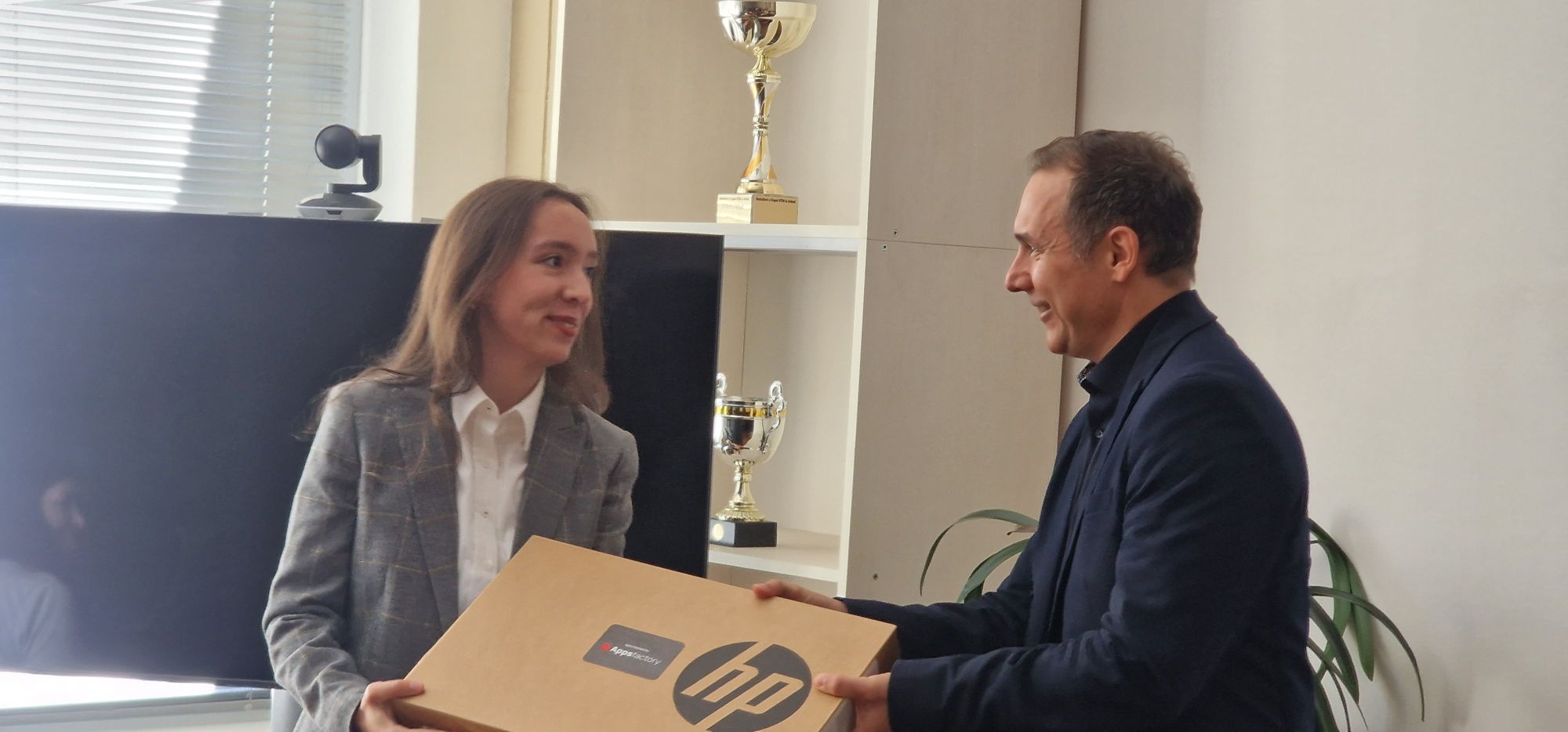
Android Development at UTM: a unique opportunity offered by AppsFactory for the future of mobile development

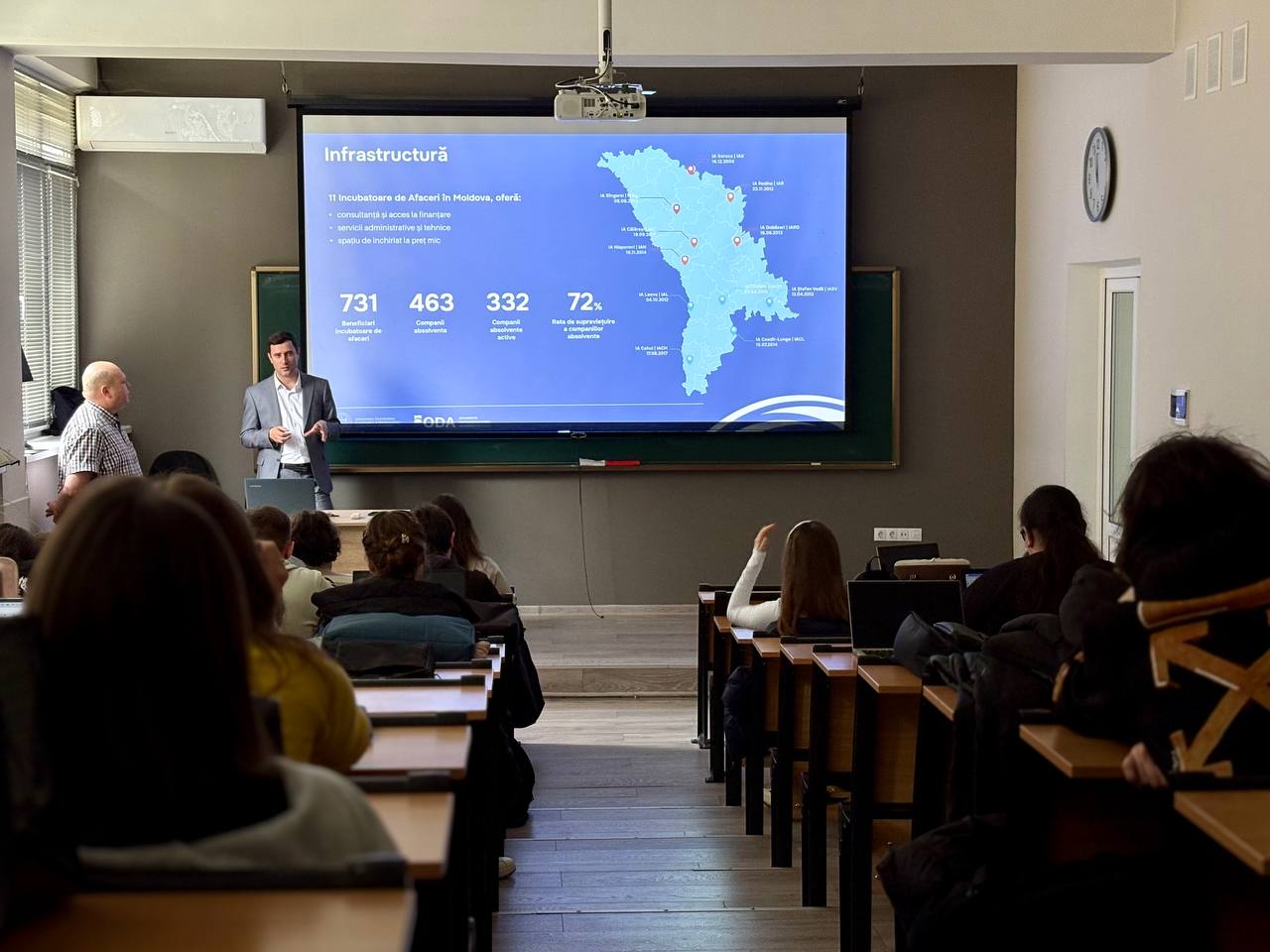
This spring brought a new perspective on mobile application development for students of the Faculty of Computers, Informatics and Microelectronics (FCIM) of the Technical University of Moldova. Through the “Android Development” lesson series, organized by the AppsFactory company, future IT specialists had the opportunity to deepen their knowledge and explore the most modern technologies used in the software industry.

For young students passionate about technology, this event was, quite rightly, a significant step in their IT career. Held in the renowned “Grigore Moisil” Auditorium (3-609) in study block no. 3 of FCIM, these lectures offered students specializing in Information Technology, Information Security and Software Engineering (English-speaking branch) the opportunity to deepen their knowledge in the field of mobile applications, learning directly from industry professionals.

a 3

With a comprehensive perspective on this promising field, the program covered essential topics such as:

  • Android Development Fundamentals – a detailed introduction to the Android ecosystem and the use of the Kotlin language for mobile application development. Students explored application architecture, resource management, and the fundamental components of the platform.
  • UI, Navigation, and Asynchrony – a comparative analysis between classic and modern approaches to developing graphical interfaces, with a focus on Jetpack Compose. At the same time, students reflected on defining topics, such as navigation management and implementing asynchronous processes to optimize performance.
  • Android Application Architecture – implementing the MVVM pattern for a clear separation of responsibilities in applications. Students discovered the advantages of using Room for data persistence, integrating Dependency Injection, and optimizing performance through Gradle and advanced debugging.

The course was a true transition from theory to practice. Integrated into the project discipline “Modeling and Implementing Systems Using WEB Technologies”, the initiative significantly contributed to the development of students’ skills in creating and implementing modern software solutions, preparing them for real industry challenges.

In addition to gaining technical knowledge, the event was a great opportunity for networking and professional development. Students interacted with experts in the field, asked questions and better understood current trends in the IT industry, deepening essential concepts in Android development, overcoming the psychological barrier of getting involved in real practical projects.

c 2

“This initiative represents a concrete example of how academia and industry can collaborate to provide our students with solid practical training. We are grateful to AppsFactory for its active involvement in developing the skills of future IT specialists and we hope that such collaborations will continue and expand”, stated with appreciation and enthusiasm Associate Professor, Dr. Dumitru CIORBĂ, Dean of FCIM, underlining the importance of strategic partnerships in training well-prepared specialists for the challenges of the IT industry.

The collaboration between UTM and AppsFactory represents a successful example of the partnership between academia and industry. This synergy contributes to the training of well-prepared IT specialists, capable of facing the challenges of the software industry. At the same time, the partnership with AppsFactory emphasizes UTM’s desire to provide students with a high-quality education, relevant learning experiences and adapted to the requirements of the labor market.

b 6

Both students and teachers expressed their gratitude to the AppsFactory team and everyone involved in organizing this exceptional educational event, expressing their openness to continuing such collaborations aimed at supporting the professional development of young people and providing them with the best learning opportunities.

AppsFactory is a software development company with extensive experience in creating mobile applications for various platforms. Recognized for its expertise in Android technologies, the company actively collaborates with prestigious academic institutions, supporting the training of new generations of IT specialists.

“Materials Today Nano” (Elsevier) publishes a new UTM-branded paper

Researchers from the Department of Microelectronics and Biomedical Engineering (DMIB) within the Faculty of Computers, Informatics and Microelectronics (FCIM) of the Technical University of Moldova (UTM) have achieved a new scientific success of international significance – they have recently published a paper in the renowned journal “Materials Today Nano”, edited by the prestigious Elsevier group. This publication is in an elite segment of academic journals, being ranked Q1 in four key areas: condensed matter physics, biomaterials, materials chemistry, and electronic, optical and magnetic materials.

Hydrogen – the energy of the future and the challenges of detection

The paper is the result of a joint effort carried out over 4 years of collaboration between UTM, Christian-Albrechts University of Kiel (Germany), Fraunhofer Institute for Silicon Technology (Germany) and the University of Central Florida (USA). The study focuses on one of the most pressing issues in the use of hydrogen as an alternative energy source: the safety of its detection. Although hydrogen is a promising energy resource, its use comes with major challenges caused by its intrinsic properties – it is colorless, odorless, highly flammable, and difficult to detect.

a

To address this challenge, the research team from the Technical University of Moldova has developed an innovative nanosensor, based on ZnO/Al₂O₃ binary core – ternary shell nanowires, realized through the Kirkendall effect at the nanoscale. This advanced structure allows for extremely fast hydrogen detection, even at low temperatures, with a response time of up to one second and high sensitivity at concentrations as low as 100 ppm.

Nanosensor technology – innovation at the atomic level

The nanowires used in this nanosensor were obtained by flame transport synthesis and atomic layer deposition, followed by a heat treatment at 975°C, which led to the transformation of Al₂O₃ into ZnAl₂O₄. This modification generates an n-n heterostructure that acts as a catalyst, amplifying the sensor signal in the presence of hydrogen. Experimental validation was carried out by advanced techniques such as SEM, TEM, HRTEM and XRD, confirming the structural and functional performances of the device.


graphical abstract

The publication of this work in Materials Today Nano provides a special exposure to the scientific community at UTM, being accessible through ScienceDirect to millions of researchers worldwide. This contributes to both increasing the notoriety of the authors and the institution they represent, consolidating UTM’s position in the elite of international research.

The Department of Microelectronics and Biomedical Engineering within FCIM-UTM has an essential role in promoting excellent research and international collaborations. The teaching staff here transfer their experience every day to students from three study programs: “Applied Electronics”, “Microelectronics and Nanotechnologies” and “Biomedical Engineering” from cycles I and II – bachelor’s and master’s degrees, as well as to 5 specialties from cycle 3 – doctorate.

Students passionate about microelectronics and nanotechnologies have the opportunity to actively participate in such revolutionary research within the Center for Nanotechnologies and Nanosensors of UTM. This dynamic academic environment allows them to engage in innovative projects with global impact, thus contributing to the scientific and technological progress of society.

Online references:

https://www.sciencedirect.com/science/article/pii/S2588842025000276

https://ars.els-cdn.com/content/image/1-s2.0-S2588842025000276-mmc1.docx

https://fcim.utm.md/departamentele-fcim/departamentul-mib/

https://www.scopus.com/authid/detail.uri?authorId=10640885800

https://www.scopus.com/authid/detail.uri?authorId=57211992969

The teams involved are affiliated with different research centers:

Center for Nanotechnology and Nanosensors, Department of Microelectronics and Biomedical Engineering, Technical University of Moldova, 168, Stefan cel Mare Av., MD-2004, Chisinau, Republic of Moldova

b Chair for Synthesis and Real Structure, Department of Materials Science, Faculty of Engineering, Christian-Albrechts Universität zu Kiel, Kiel, Kaiserstraße 2, D-24143 Kiel, Germany

c Chair for Functional Nanomaterials, Department of Materials Science, Faculty of Engineering, Christian-Albrechts Universität zu Kiel, Kiel, Kaiserstraße 2, D-24143 Kiel, Germany

d Fraunhofer Institute for Silicon Technology (ISIT), Itzehoe, Germany

e Chair for Inorganic Functional Materials, Department of Materials Science, Faculty of Engineering, Christian-Albrechts Universität zu Kiel, Kiel, Kaiserstraße 2, D-24143 Kiel, Germany

f Department of Physics, University of Central Florida, Orlando, FL 32816-2385, USA

UTM rewards performance: Maxim CHIRIAC, an example of excellence

Talent, hard work and an unquenchable passion for innovation – these are the elements that define the academic path of Maxim CHIRIAC, the student who obtained two important awards: “Best Master’s Student” and “Best Master’s Thesis”, awarded by the Senate of the Technical University of Moldova on January 29, 2025. This is not the first […]